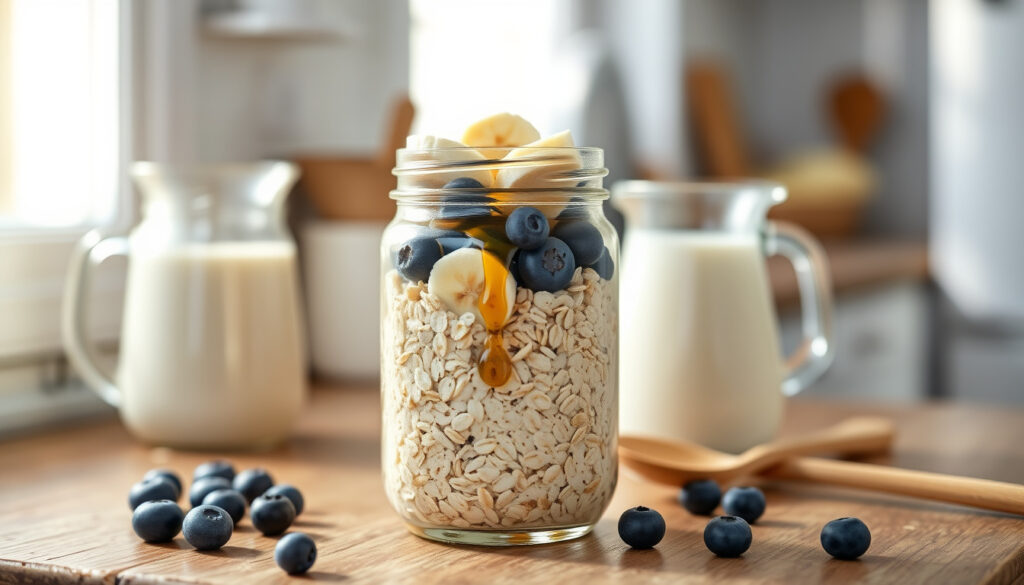
How to Make Overnight Oats: Ratio, Best Liquids & What to Avoid
Anyone who has tried to prep a healthy breakfast the night before knows the tension between convenience and taste. Overnight oats solve that problem, but only when you nail the liquid-to-oat ratio. This guide lays out the evidence-backed formula, the healthiest liquid options, and the ingredients that can wreck your jar — so you get a creamy, satisfying breakfast every time.
Average refrigeration time: 6-8 hours ·
Basic ingredient ratio: 1 part oats : 1 part liquid ·
Calories per serving (base): 200-350 kcal ·
Protein per serving (with milk): 10-15 g ·
Fiber per serving (with chia): 5-8 g ·
Popular add-ins: yogurt, fruit, nuts, seeds
Quick snapshot
- Rolled oats + milk + yogurt + chia seeds (Budget Bytes (budget-friendly recipe blog))
- Sweetener optional (Healthy Life Trainer (fitness nutrition site))
- Fruit topping (Love and Lemons (whole-food recipe site))
- Add protein powder or more yogurt (Love and Lemons (whole-food recipe site))
- Use milk instead of water (Healthy Life Trainer (fitness nutrition site))
- Add nuts and seeds (Budget Bytes (budget-friendly recipe blog))
- Plant milk + coconut yogurt (Healthy Life Trainer (fitness nutrition site))
- Chia seeds for thickness (Budget Bytes (budget-friendly recipe blog))
- Maple syrup or dates (Healthy Life Trainer (fitness nutrition site))
- Low-cal milk (almond) (Healthy Life Trainer (fitness nutrition site))
- Skip sweeteners (Love and Lemons (whole-food recipe site))
- Add berries and cinnamon (Budget Bytes (budget-friendly recipe blog))
| Recommended soak time | 6-12 hours |
| Typical serving size | 1/2 cup dry oats |
| Average cost per serving | $0.50-$1.00 |
| Storage | Refrigerator in sealed jar |
How do you make overnight oats?
Five ingredients, one jar, and a night in the fridge — that’s the core method. Recipe developers agree on the basic mechanics, though ratios vary slightly.
Basic ratio of oats to liquid
- The most common base uses equal parts rolled oats and liquid by volume, typically ½ cup of each (Lexi’s Clean Kitchen (whole-foods recipe blog)).
- Some recipes prefer a thicker texture: 1 part liquid to 2 parts oats (Healthy Life Trainer (fitness nutrition site)).
- If you add chia seeds, increase liquid slightly — they absorb moisture (Budget Bytes (budget-friendly recipe blog)).
Step-by-step instructions
- Combine ½ cup rolled oats, ½ cup milk (or yogurt), and any flavorings in a jar. Stir well so chia seeds don’t clump (Love and Lemons (whole-food recipe site)).
- Cover and refrigerate at least 6 hours, but 8 hours is typical (Healthy Life Trainer (fitness nutrition site)).
- In the morning, stir, add toppings (fruit, nuts, seeds), and eat cold or warm (Healthy Life Trainer (fitness nutrition site)).
Texture fix: if it’s too thick, add more milk; if too thin, stir in extra oats (Fit Foodie Finds (healthy recipe blog)).
Add-ins and toppings
- Sweeteners: honey, maple syrup, brown sugar (Healthy Life Trainer (fitness nutrition site)).
- Flavor boosters: pinch of salt, cinnamon (Budget Bytes (budget-friendly recipe blog)).
- Yogurt adds creaminess, probiotics, and protein — about ¼ cup per serving (Budget Bytes (budget-friendly recipe blog)).
The 1:1 oat-to-liquid ratio is the safest starting point for beginners. Add yogurt for creaminess, chia for thickness, and adjust liquid if you use either. The recipe is forgiving — you can tweak it after the first batch.
What is the basic formula for overnight oats?
Three numbers define the standard formula. Here’s how they work together.
Standard ingredient proportions
- Classic: ½ cup oats, ½ cup milk, ¼ cup yogurt (Budget Bytes (budget-friendly recipe blog)).
- Love and Lemons uses ½ cup oats, ⅔ cup milk, 1 tbsp chia (Love and Lemons (whole-food recipe site)).
- Lexi’s Clean Kitchen: ½ cup oats, ½ cup milk, no yogurt (Lexi’s Clean Kitchen (whole-foods recipe blog)).
Flexible variations (vegan, high-protein)
- Vegan: plant milk + coconut yogurt (Healthy Life Trainer (fitness nutrition site)).
- High-protein: extra yogurt or a scoop of protein powder (Love and Lemons (whole-food recipe site)).
- Chia seeds can replace yogurt for thickness (Budget Bytes (budget-friendly recipe blog)).
Common mistakes in ratios
- Too much liquid = soupy oats. Stick to 1:1 or slightly less if using chia (Budget Bytes (budget-friendly recipe blog)).
- Steel-cut oats need more liquid and longer soak — not ideal for overnight recipes (Budget Bytes (budget-friendly recipe blog)).
- Quick oats can turn mushy; rolled oats are preferred (Budget Bytes (budget-friendly recipe blog)).
Why the ratio matters: The 1:1 base gives you control. Once you know how each ingredient behaves, you can adapt to your preferred texture.
More yogurt means more protein and creaminess but also more calories per gram of carb. If you’re after a leaner breakfast, skip the yogurt and rely on milk + chia for texture.
Are overnight oats actually healthy?
Oats are naturally rich in soluble fiber, and the overnight soak may improve digestibility. But the final nutritional profile depends heavily on your add-ins.
Nutritional benefits
- Oats are high in beta-glucan, a soluble fiber that supports heart health (Healthy Life Trainer (fitness nutrition site)).
- Overnight refrigeration reduces phytic acid, making minerals more absorbable (Fit Foodie Finds (healthy recipe blog)).
- Combined with milk or yogurt, you get 10-15 g protein and 5-8 g fiber per serving.
Potential drawbacks (sugar, calories)
- Store-bought flavored oats can pack 15+ g added sugar per serving (Love and Lemons (whole-food recipe site)).
- Homemade versions let you control sweeteners — skip them for a lower-calorie meal (Budget Bytes (budget-friendly recipe blog)).
- Heavy add-ins (nut butters, dried fruit, chocolate) can push a serving above 500 kcal.
How to optimize for health
- Choose unsweetened plant milk or skim dairy (Healthy Life Trainer (fitness nutrition site)).
- Limit sweeteners to 1 tsp honey or maple syrup, or use mashed banana (Lexi’s Clean Kitchen (whole-foods recipe blog)).
- Add cinnamon – it tastes sweet without sugar and may help regulate blood glucose.
The catch: Overnight oats are healthy by default, but the add-in zone is where calories and sugar creep in. Homemade gives you full control.
If you’re using flavored plant milk (e.g., vanilla almond), check the label – it often contains added sugar. Unsweetened varieties keep your breakfast lean.
What is the best liquid for overnight oats?
Your liquid choice changes both texture and nutrition. Here’s how common options compare.
| Liquid | Textural effect | Calories per ½ cup | Protein (g) |
|---|---|---|---|
| Whole milk | Creamy, rich | 75 | 4 |
| Skim milk | Lighter, still creamy | 45 | 4 |
| Almond milk (unsweetened) | Thin, mild | 15 | 1 |
| Soy milk | Moderate, nutty | 40 | 3.5 |
| Oat milk | Thicker, sweet | 60 | 1.5 |
| Coconut milk (from carton) | Thin, subtle flavor | 23 | 0 |
Six liquids, one pattern: dairy milks deliver protein and creaminess; plant milks lower calories but sacrifice protein. For a high-protein breakfast, stick with dairy or soy (Healthy Life Trainer (fitness nutrition site)).
Dairy milk
- Whole milk adds creaminess and about 4 g protein per ½ cup (Love and Lemons (whole-food recipe site)).
- Skim milk offers the same protein with fewer calories.
Plant-based milks
- Almond milk is lowest in calories but thin; add yogurt or chia to thicken (Healthy Life Trainer (fitness nutrition site)).
- Oat milk is naturally sweet and thickens well, but contains more sugar than other plant options.
- Soy milk provides the most protein among plant alternatives (Fit Foodie Finds (healthy recipe blog)).
Yogurt-based liquids
- Using yogurt as part of the liquid adds creaminess, probiotics, and extra protein (Budget Bytes (budget-friendly recipe blog)).
- Greek yogurt thickens the mixture more than regular yogurt.
- If you skip liquid milk entirely and use only yogurt, you’ll need to thin with water or plant milk.
Why this matters: The best liquid for you depends on your protein and calorie goals. Dairy gives protein, almond gives lightness, oat gives sweetness.
Oat milk sounds like the most natural fit for overnight oats, but it adds extra carbs and sugar. If you want the oatmeal taste without the blood-sugar spike, unsweetened almond or soy is a smarter choice.
What not to put in overnight oats?
Some ingredients turn a perfect jar into a texture disaster or a spoilage risk. Avoid these three categories.
Ingredients that become mushy
- Granola: It absorbs liquid and loses all crunch (Fit Foodie Finds (healthy recipe blog)).
- Fresh citrus fruits (lemon, orange, grapefruit): Their acid can curdle dairy-based liquids (Love and Lemons (whole-food recipe site)).
- Quick oats: They break down too fast and turn pasty (Budget Bytes (budget-friendly recipe blog)).
Ingredients that spoil quickly
- Fresh berries can mold if kept in the jar overnight – add them in the morning (Love and Lemons (whole-food recipe site)).
- Cut avocado turns brown and slimy after a few hours.
- Soft fruits (banana, mango) oxidize and can ferment if left too long.
Add-ins that change texture
- Excess liquid sweeteners (honey, maple syrup) make the oats too wet – stick to 1 tablespoon per serving (Healthy Life Trainer (fitness nutrition site)).
- Protein powders can clump if not whisked in thoroughly (Fit Foodie Finds (healthy recipe blog)).
- Nut butters: delicious, but can make the mixture overly thick – thin with extra milk.
The pattern: Almost everything works if you add it at the right time. Wet ingredients go in overnight; crunchy and fresh ingredients go on top in the morning.
The biggest rookie mistake is putting granola in the jar. It seems logical, but after eight hours you’ll have a bowl of sad, wet particles. Keep it as a morning topping.
Upsides
- Meal-prep friendly: assemble in 5 minutes, store for up to 5 days (Love and Lemons (whole-food recipe site))
- Customizable texture and flavor (Fit Foodie Finds (healthy recipe blog))
- High in fiber and protein with the right add-ins (Budget Bytes (budget-friendly recipe blog))
- Cheap: $0.50-$1 per serving
Downsides
- Not ideal for steel-cut or quick oats (Budget Bytes (budget-friendly recipe blog))
- Requires advance planning (6-8 hours)
- Can become high in sugar if not careful (Healthy Life Trainer (fitness nutrition site))
- Texture preference varies – some dislike cold oats
Confirmed facts
- Oats are high in beta-glucan, a soluble fiber (Healthy Life Trainer (fitness nutrition site))
- Overnight refrigeration improves digestibility (Fit Foodie Finds (healthy recipe blog))
- Basic ratio is 1:1 oats to liquid by volume (Lexi’s Clean Kitchen (whole-foods recipe blog))
What’s unclear
- Whether rolled oats are nutritionally superior to quick oats – research is mixed
- Optimal soaking time for maximum nutrient availability – most recipes recommend 6-12 hours without evidence for the ideal window
“The classic overnight oats formula is ½ cup old-fashioned oats, ½ cup milk, plus chia seeds and a pinch of salt – that’s the base you can build on.”
— Budget Bytes, recipe developer blog
“You can use a 2-ingredient base: oats and milk. Then add yogurt, fruit, or nuts depending on what you have in the fridge.”
— Feel Good Foodie, recipe developer blog
For the average home cook looking for a fast, healthy breakfast, the 1:1 ratio with rolled oats and milk is the most forgiving starting point. Use unsweetened almond milk if you’re cutting calories, or whole milk if you want protein and creaminess. Add yogurt for extra thickness, and skip the granola – put it on top in the morning. The choice is clear: overnight oats work, but only if you respect the ratio and the timing.
Related reading: Overnight Oats Base Recipe Plus Variations · Overnight Oats Recipe
Frequently asked questions
Can I use steel-cut oats for overnight oats?
Steel-cut oats require more liquid and a longer soak – usually 12+ hours. They remain chewy, not creamy. Rolled oats are the standard recommendation (Budget Bytes (budget-friendly recipe blog)).
How long can I store overnight oats in the fridge?
Most sources say up to 5 days in an airtight container (Love and Lemons (whole-food recipe site)).
Can I eat overnight oats warm?
Yes. Heat them in the microwave for 1-2 minutes or on the stove. Add a splash of milk to thin them out (Fit Foodie Finds (healthy recipe blog)).
Do I need to add chia seeds?
No. Chia seeds thicken the mixture and add fiber, but you can skip them and use extra yogurt or just rely on the oats (Budget Bytes (budget-friendly recipe blog)).
Are overnight oats gluten-free?
Oats are naturally gluten-free, but cross-contamination is common. Choose certified gluten-free oats if you have celiac disease (Healthy Life Trainer (fitness nutrition site)).
Can I use water instead of milk?
Yes, but the result will be less creamy and lower in protein. Add yogurt or a scoop of protein powder to compensate (Healthy Life Trainer (fitness nutrition site)).
How do I make overnight oats creamy?
Use whole milk, add yogurt, or blend a banana into the liquid. Chia seeds also add a pudding-like thickness (Love and Lemons (whole-food recipe site)).
More related posts
 Tiffany & Co. Necklaces: Cost, Value & Authenticity
 Lazy Sunday Morning Perfume: Notes, Review & Longevity
 Bukit Panjang Plaza Directory: Shops, Owner & Transport
 20000 HKD to SGD: Compare Wise, Xe & Revolut Rates
 No Gain No Love: Worth Watching? Episodes, Age Gap & Ending
 Words That Start With X: List, Meanings, and Examples
 Chelsea F.C. vs Tottenham Stats – Head-to-Head Record and Results