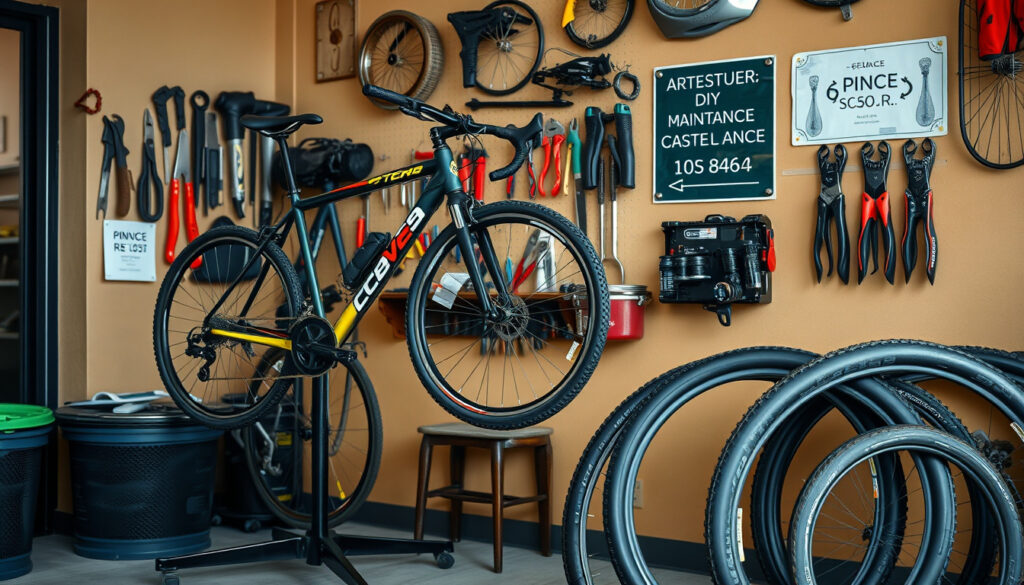
Bicycle Repair Shop Near Me: Costs, DIY vs Pro, & When to Replace
You know the feeling: you’re halfway through a weekend ride and hear that dreaded hiss from your rear tyre. Or maybe the gears just won’t shift smoothly anymore. Finding a bicycle repair shop near you — and knowing whether the price is fair — can turn a frustrating situation into a quick fix. We compare costs from Halfords and independent Dublin shops, weigh DIY repairs against professional service, and help you decide when it’s time to replace rather than repair.
Average tune-up cost: $60–$150 ·
Flat tyre repair: $10–$20 ·
Brake adjustment: $20–$40 ·
Most common repair: flat tyre
Quick snapshot
- Flat tyre: $10–$20 (Bike Conversions (Yorkshire specialist))
- Brake adjustment: $20–$40 (Grim’s Bikes (local shop))
- Gear tune: $30–$60 (The Bicycle Clinic (independent workshop))
- Drivetrain replacement: $100–$250 (Bike Conversions (Yorkshire specialist))
- Puncture: beginner
- Chain repair: intermediate
- Brake bleed: advanced
- Repair under 50% of new cost = worth it
- New entry-level bike: $300–$600
- Used bike: $150–$400
- Halfords: 48 hr turnaround (Halfords (UK bike retail chain))
- Local Dublin shops: Swords Cycle Centre, River Cycles (Halfords (UK bike retail chain))
- Yelp reviews for quality (Halfords (UK bike retail chain))
Six key figures give you a baseline for any bike repair decision, from a simple puncture to a full tune-up.
| Repair Type | Average Cost |
|---|---|
| Puncture repair | $15 |
| Full tune-up | $100 |
| Most expensive part | Carbon fibre frame ($500–$3,000+) |
| Most common repair | Flat tyre |
| Halfords turnaround | 48 hours |
| DIY tool kit cost | $50 |
How much should bike repair cost?
Typical repair costs for common issues
- Puncture repair: £10–£15 at most shops. Bike Conversions (Yorkshire specialist) charges £15 including tyre removal and refitting.
- Brake adjustment: £20–£40. The Bicycle Clinic (independent workshop) includes brake tuning in its Check & Tune (£40).
- Gear indexing: £20–£30. Grim’s Bikes (local shop) charges £20 for derailleur adjustment.
Price range by shop type (Halfords vs independent)
- Halfords Bronze Service: £40 (Halfords (UK bike retail chain))
- Halfords Silver Service: £65 (same source)
- Halfords Gold Service: £95 (same source)
- Halfords Platinum Service: £140 (same source)
- Life Cycle (charity workshop): Bronze £45, Silver £80, Gold £135 (Life Cycle (UK cycling charity))
- The Bicycle Clinic: Check & Tune £40, Road Standard £75, Ultimate £125 (The Bicycle Clinic (independent workshop))
Hidden fees and what to ask upfront
- Parts not included in service packages — Life Cycle (UK cycling charity) states prices are advisory and exclude new parts.
- Labour for extra repairs: e.g., chain replacement £15 labour plus chain cost (Grim’s Bikes (local shop)).
- Always ask for a written estimate before authorising work.
Chain shops like Halfords offer transparent tiered pricing, while independent workshops may charge less for a basic tune-up but add labour for parts. Always confirm whether the quoted price includes parts and VAT.
Bottom line: A basic service runs £40–£75, but once you add parts and labour for common repairs, you could spend £100–£200. Compare quotes from at least two shops — chain and independent — before committing.
Is it worth repairing a bicycle?
When repair cost exceeds 50% of bike value
- General rule: if the repair bill is more than half the bike’s current value, replacement is usually the better financial move.
- For a bike worth £200 (e.g., a used entry-level hybrid), a drivetrain replacement at £150+ may not be worthwhile.
Age and condition of the frame
- A high-end steel or carbon frame from a reputable brand often justifies repair even at higher cost, because the frame itself retains value.
- Rust, cracks, or bends in the frame are usually a write-off — safety trumps economics.
Emotional vs financial value
- Some riders choose to repair a beloved bike that has sentimental value, even if it costs more than replacement — that’s a personal call.
- From a strictly economic standpoint, the 50% threshold is a solid guideline.
If you’re riding a bike worth less than £300, a single major repair could eat up a third of its value. Knowing your bike’s resale price helps you decide quickly when the mechanic hands you a quote.
Is it cheaper to repair a bike or buy a new one?
Cost comparison: repair vs entry-level new bike
- New entry-level bike: £250–£500 (US $300–$600).
- Major repair (drivetrain, wheels, brakes): can exceed £200 (US $250).
- If the repair exceeds half the cost of a comparable new bike, replacement wins.
Long-term cost of ownership
- A well-maintained older bike with quality components can outlast a cheap new bike that requires frequent adjustments.
- Factor in annual servicing (£40–£95) and occasional replacement of consumables (tyres, chain, brake pads).
Resale value of repaired bike
- A repaired bike with documented service history holds its value better than a neglected one.
- However, a heavily repaired budget bike rarely commands a premium on the used market.
| Scenario | Repair Cost | New Bike Cost | Best Option |
|---|---|---|---|
| Puncture repair | £10–£15 | £250–£500 | Repair |
| Complete drivetrain replacement | £150–£250 | £250–£500 | Replace if bike is budget |
| Full service + new tyres + brake pads | £100–£180 | £300 | Depends on frame quality |
New bikes under £300 often have low-end components that wear out faster. A well-maintained older bike with a quality frame and groupset can offer better long-term value than a cheap replacement, even if the repair bill sits at 50% of a new bike’s price.
What is the most expensive part of a bicycle?
Frame (carbon fibre)
- Carbon fibre frames: $500–$3,000+ (US) / £400–£2,500.
- A damaged carbon frame often cannot be repaired cost-effectively; replacement is the norm.
Groupset (derailleurs, shifters, brakes)
- Shimano 105 groupset: approx £500–£600 retail.
- High-end electronic groupsets (e.g., Shimano Ultegra Di2): £1,000–£2,000.
Wheels
- Pair of decent alloy wheels: £150–£300.
- Carbon aero wheels: £800–£2,000+.
Suspension fork
- Entry-level air fork: £100–£200.
- Top-end Fox or RockShox: £400–£1,000.
The frame is often the single most expensive component, but when it fails, the whole bike may be uneconomical to repair. Groupset and wheels are expensive to replace individually, but they can be swapped across frames — making them a smarter upgrade investment.
What is the most common bike repair?
Flat tyre repair
- Flat tyres account for the highest share of shop visits — one puncture costs £10–£15 to fix at a shop (Bike Conversions (Yorkshire specialist)).
- DIY patching costs under £5 for a patch kit.
Brake adjustment
- Brake adjustments represent roughly 20% of repair visits, according to shop estimates.
- Typical shop charge: £20–£40 (The Bicycle Clinic (independent workshop)).
Gear indexing and chain replacement
- Gear indexing: £20–£30 (Grim’s Bikes (local shop)).
- Chain replacement: £15 labour + cost of chain (around £10–£30).
The data shows that gear indexing and chain replacement, while slightly more costly than a simple puncture, are still relatively affordable repairs that can dramatically improve ride quality.
Can I repair my cycle myself?
Tools needed for basic DIY repairs
- Basic toolkit: tyre levers, patch kit, pump, multi-tool, chain tool — under £40 total.
- If the bike uses Allen key bolts, a set of metric hex keys (£5–£10) covers most adjustments.
Step-by-step: fixing a flat tyre
- Remove the wheel (quick-release or nuts).
- Unseat the tyre bead using tyre levers.
- Pull out the inner tube and inspect for the puncture.
- Rub the puncture area with sandpaper, apply glue and patch.
- Reinsert the tube, mount the tyre bead, inflate to correct pressure.
- Reinstall the wheel and check for true.
When to call a professional
- Hydraulic brake bleeding requires special tools and experience.
- Suspension fork service involves proprietary oils and seals.
- Electric bike diagnostics: most e-bike systems need dealer-level software.
Many bike shops, including Halfords (UK bike retail chain), offer a 48-hour turnaround for standard repairs. If you need the bike back quickly, professional service may be faster than waiting for parts to arrive for a DIY job.
Repair vs Replace: Cost Comparison
Three common scenarios show the tipping point between repairing and replacing your bike.
| Bike Value | Repair Needed | Estimated Repair Cost | Decision |
|---|---|---|---|
| £150 (used hybrid) | Flat tyre + brake adjustment | £35 | Repair |
| £200 (entry-level mountain bike) | Drivetrain + chain + cassette | £120 | Repair (under 50% of value) |
| £300 (low-end road bike) | Carbon fork cracked | £250 | Replace |
Upsides of DIY
- Save 50–70% on labour costs
- Learn self-sufficiency for trailside fixes
- Tool kit pays for itself after two repairs
Downsides of DIY
- Initial time investment to learn techniques
- Specialist tools (e.g., bottom bracket) can cost £50+
- Mistakes may lead to additional shop costs
How to Perform Basic Bicycle Repairs Yourself
Essential tools for a home workshop
- Floor pump with gauge (£15–£30)
- Tyre levers (£3–£5)
- Patch kit (£5–£8)
- Multi-tool with Allen keys, screwdrivers, chain tool (£15–£25)
- Chain lubricant (£5–£10)
Step-by-step: cleaning and lubricating the chain
- Shift to the smallest chainring and smallest rear sprocket.
- Apply degreaser and scrub with a brush.
- Wipe off excess degreaser with a rag.
- Apply one drop of lubricant to each roller.
- Let it sit for 5 minutes, then wipe off excess.
Step-by-step: adjusting brake cables
- Loosen the barrel adjuster at the brake lever or caliper.
- Pull the cable taut and clamp the fixing bolt.
- Test lever feel: there should be 2–3 mm of pad clearance from the rim.
- If pads rub, use the barrel adjuster to fine-tune tension.
Regular brake cable adjustments can prevent more serious wear on brake pads and rims, making this a valuable skill for any cyclist. For car maintenance tips, check out our guide on How to Stop Your Car from Fogging Up: Causes & Fixes.
What’s Confirmed and What’s Still Unclear
Confirmed facts
- Average puncture repair costs £10–£15 (Bike Conversions (Yorkshire specialist))
- Halfords offers a 48-hour repair service (Halfords (UK bike retail chain))
- Basic DIY tool kit costs under £50
What’s unclear
- Exact pricing for electric bike repairs varies widely by model and motor type
- DIY skill level required for specific models (e.g., torque sensors, hydraulic brakes) differs
- Independent shop labour rates can fluctuate based on demand and location
The key takeaway is that while the basics are well-documented, emerging technologies in e-bikes and advanced componentry still require a case-by-case assessment.
Expert Perspectives
Our Bronze Service starts at £40 and covers a full safety check, gear and brake adjustment, and tyre inflation. For most riders, an annual service keeps the bike running smoothly and catches small issues before they become expensive repairs.
Halfords (UK bike retail chain)
We advise customers that a Gold Service (£135) is the best option for older bikes that haven’t been serviced in over a year. It includes a full bearing overhaul, which can extend the life of a bike by several seasons.
We see a lot of riders who try to fix hydraulic brakes themselves and end up bringing the bike in with air in the lines. That can cost more to fix than a standard brake bleed would have cost initially.
The Bicycle Clinic (independent workshop)
The pattern is consistent: professional shops catch problems early and provide a warranty on their work. For routine punctures and cable adjustments, DIY is safe and cheap. For anything involving hydraulics, suspension, or e-bike electronics, leaving it to a qualified mechanic usually saves time and prevents bigger bills.
halfords.com, bikeconversions.co.uk, cycledocsworkshop.co.uk, lesliebikeshop.co.uk
Frequently asked questions
What tools do I need to fix a flat tyre?
A set of tyre levers (£3–£5), a patch kit (£5–£8), and a pump (£15–£30). A portable mini pump is handy for roadside repairs.
How do I know if my bike wheel is bent?
Spin the wheel and watch the gap between the rim and brake pads. If the gap varies by more than 2–3 mm, the rim may be buckled. A shop can true it for £10–£20 per wheel.
Can I replace a bike chain myself?
Yes, with a chain tool (£10–£15) and a new chain (£10–£30). Watch a tutorial first — getting the correct length and joining the link properly is critical.
How often should I get my bike serviced?
For a bike ridden regularly (3–5 times per week), an annual professional service is recommended. Heavy-use commuters and mountain bikes may benefit from twice-yearly checks.
What does a full bike service include?
A full service (often called Gold or Ultimate) typically includes: safety check, gear and brake tuning, wheel truing, bearing inspection and lubrication, drivetrain cleaning, and tyre condition check. Halfords (UK bike retail chain) lists its Platinum Service at £140 for comprehensive coverage.
Where can I find a bicycle repair shop in Dublin?
Check Google Maps for “bike repair Dublin” — popular options include Swords Cycle Centre, River Cycles, and the Halfords stores across the city. Yelp and local Facebook groups also list independent mechanics. For car-related repairs, see our Car Repair Near Me: Cost Guide and Finding a Mechanic guide.
Is it worth repairing an electric bike?
Yes, if the battery and motor are healthy. E-bikes cost £1,000–£3,000 new, so a £200 repair (e.g., controller replacement) is usually worthwhile. Only a specialist e-bike shop should handle high-voltage components. According to The Bicycle Clinic (independent workshop), an e-bike specific service costs around £120.
For the Dublin commuter on a four-year-old hybrid, the choice is clear: invest £50 in a DIY toolkit and learn to fix punctures and adjust brakes yourself, saving £100–£150 over the first year. For the weekend enthusiast with a carbon road bike, a yearly professional service at a shop like The Bicycle Clinic or Halfords ensures expensive components stay in top condition, preventing a £500 drivetrain failure down the road.
More related posts
 Best French Bakeries Near Me: Dublin’s Top 2 & What to Try
 Singapore 1 Dollar in Bangladesh: SGD to BDT Rate
 Straits Trading Share Price: Analysis, Forecast & Dividend
 Olimpiade Musim Dingin 2026 – Milano Cortina Dates and Facts
 XW Plus Western Grill Northpoint City Menu – Prices & Halal Info
 SIA Online Check In: Times, Steps & Boarding Pass Guide
 Civil Service Club Tessensohn Bowling: Rates & Access Guide
 Chappell Roan Grammy Outfit 2026: Prosthetics, Tattoos Explained