Char Kway Teow Singapore – Best Hawker Stalls Guide
Best Char Kway Teow in Singapore 2025: Top Stalls, Recipe, Guide & Facts
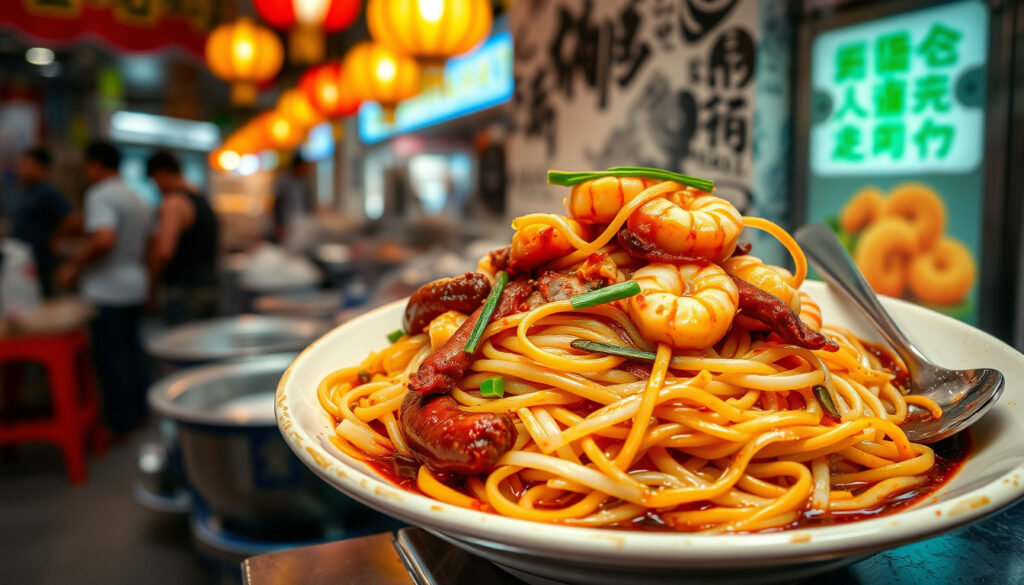
Char kway teow stands as one of Singapore’s most beloved hawker dishes, consisting of flat rice noodles stir-fried over high heat with an array of savory ingredients. The dish has earned its place as a cornerstone of Singapore’s vibrant food culture, appearing on menus across hawker centres, coffee shops, and restaurants throughout the island. Its distinctive smoky flavour, known as wok hei, comes from the intense heat of traditional wok cooking, a technique that requires considerable skill and experience to master.
The name itself reflects the dish’s Hokkien and Teochew origins, with “char” meaning stir-fried and “kway teow” referring to the flat rice noodles that form its base. This linguistic heritage points to the dish’s roots among Chinese immigrant communities in Southeast Asia, where it evolved from a simple peasant meal into a celebrated street food delicacy. Today, char kway teow represents not only a delicious meal but also a testament to Singapore’s multicultural heritage and the resilience of traditional cooking methods.
Singapore’s hawker culture, which earned UNESCO Intangible Cultural Heritage status in 2020, has played a crucial role in preserving and promoting char kway teow. The combination of affordable pricing, typically ranging from $3 to $4 per plate, and consistent quality has ensured the dish remains accessible to Singaporeans from all walks of life. Hawker masters who dedicate their lives to perfecting this dish pass down techniques through generations, maintaining the authenticity that makes Singapore’s char kway teow distinctive.
Singapore’s most beloved street food with deep cultural roots
Flat rice noodles cooked at searing temperatures
Cockles, lap cheong (sausage), bean sprouts, eggs
Outram Park, Zion Road, Hill Street, Maxwell-area vendors
Authentic char kway teow is defined by wok hei, the breath of the wok—a smoky flavour imparted by cooking at extremely high temperatures. Traditional preparations use lard, which enhances both the taste and texture. Each hawker master develops their own signature approach, making every plate a unique expression of skill and experience.
- Wok hei (breath of the wok) is essential to authentic character
- Singapore hawker culture gained UNESCO recognition in 2020
- Prices typically range from $3 to $4 per plate
- Michelin Bib Gourmand recognition has boosted certain stalls’ popularity
- Individual plate frying ensures consistent quality
- Hawker masters pass down techniques across generations
- Availability varies significantly by location and operating hours
| Fact | Detail |
|---|---|
| Origin | Hokkien/Teochew Chinese immigrant communities |
| Base ingredient | Flat rice noodles (kway teow) |
| Cooking method | Stir-fried over wok at high heat |
| Signature element | Wok hei (smoky flavour from intense heat) |
| Traditional fat source | Lard (contributing to rich taste) |
| UNESCO status | Hawker culture inscribed in 2020 |
Key Ingredients and Characteristics
The foundation of char kway teow lies in its flat rice noodles, which absorb flavours while maintaining a satisfying texture when cooked correctly. These wide noodles are stir-fried with a combination of ingredients that typically include cockles, Chinese sausage (lap cheong), bean sprouts, eggs, and Chinese chives. The precise combination and ratios vary by stall, with each vendor developing their own formula over years of practice.
The cooking process demands both speed and precision. A skilled hawker chef heats the wok until it begins to smoke, adds fat (traditionally lard), then quickly layers in the noodles, ingredients, and sauces. The motion is continuous and fluid, with constant tossing and flipping to ensure even cooking and maximum wok hei. This individual plate approach, where each serving is cooked separately rather than in batches, represents the commitment to quality that defines Singapore’s hawker tradition.
The dish achieves its characteristic dark colour from sweet dark soy sauce, while light soy sauce provides saltiness and additional flavour depth. Some stalls add chilli paste for those seeking extra heat, though the classic version focuses on the natural combination of wok hei, savoury sauces, and fresh ingredients. The texture contrast between the slightly crispy noodles, tender cockles, and crunchy bean sprouts creates the eating experience that has made this dish enduringly popular.
Where to Find the Best Char Kway Teow in Singapore?
Singapore’s hawker landscape offers numerous destinations for char kway teow enthusiasts, with certain stalls having achieved legendary status among locals and visitors alike. The distribution across different neighbourhoods ensures that residents from various parts of the island can access quality versions without travelling far. Each stall brings its own approach, shaped by the experience and preferences of the hawker master behind the wok.
Hong Lim Food Centre in the CBD area houses what many consider Singapore’s most celebrated char kway teow operation. Michelin-recognized establishments like Outram Park Fried Kway Teow Mee have drawn crowds since the 1950s, maintaining consistent quality that earned them Bib Gourmand status. This recognition, while attracting more visitors, has also led to longer queues, with some patrons waiting well over an hour during peak periods. The stall operates from 6am to 3:30pm, Monday through Saturday, making it a popular breakfast and lunch destination.
Zion Riverside Food Centre along the Singapore River hosts No. 18 Zion Road Fried Kway Teow, another Michelin Bib Gourmand recipient known for generous portions and masterful wok technique. The stall runs from 12:30pm to 10pm daily, offering the flexibility of evening dining that some other locations cannot match. Regular customers praise the balance of ingredients and the consistent presence of wok hei, the signature smoky flavour that distinguishes excellent char kway teow from ordinary versions.
Michelin-recognized stalls tend to have the longest queues, particularly during lunch hours and weekends. Visiting during off-peak times, such as early mornings on weekdays, may result in shorter wait times while still delivering excellent quality.
Top Hawker Stalls
Hill Street Fried Kway Teow at Blk 16, Bedok South Road appears frequently in discussions of Singapore’s finest char kway teow, often cited as a top favourite among enthusiasts. The stall operates Tuesday through Saturday, from 10:30am to 4:45pm, serving the eastern part of Singapore where quality options are less concentrated. This limited schedule means planning is essential for those travelling specifically to visit.
Hai Kee Teochew Char Kuay Teow at Telok Blangah Crescent Food Centre represents a traditional approach, previously operating from Margaret Drive before relocating. The stall has built a devoted following drawn by its commitment to frying one plate at a time, a method that ensures attention to detail but limits throughput. Opening hours run from 5:30pm to 9pm, Monday through Saturday, making this an evening destination. Long queues were common at the previous location, and the reputation has carried over to the new site.
Guan Kee Char Kway Teow at Ghim Moh Food Centre serves the west with operating hours from 9:30am to 2:30pm, closed on Mondays and Fridays. Day Night Fried Kway Teow at Bukit Merah Central offers an underrated alternative in the central region, while Dong Ji Fried Kway Teow at Old Airport Road Food Centre attracts dedicated followers who consider it superior to some award-winning competitors.
Most established char kway teow stalls operate with limited hours, often closing two days per week or operating only during specific periods. This reflects both the physical demands of wok cooking and the traditional hawker culture that values work-life balance. Calling ahead or checking current operating status before visiting is advisable, particularly for special occasions.
| Stall | Location | Hours | Notable Features |
|---|---|---|---|
| Outram Park Fried Kway Teow Mee | Hong Lim Food Centre | 6am–3:30pm (Mon–Sat) | Michelin Bib Gourmand; since 1950s; long queues |
| No. 18 Zion Road Fried Kway Teow | Zion Riverside Food Centre | 12:30pm–10pm (daily) | Michelin Bib Gourmand; generous portions |
| Hill Street Fried Kway Teow | Blk 16, Bedok South Road | 10:30am–4:45pm (Tue–Sat) | Top-ranked favourite; East Singapore location |
| Hai Kee Teochew Char Kuay Teow | Telok Blangah Crescent Food Centre | 5:30pm–9pm (Mon–Sat) | Individual plate frying; relocated from Margaret Drive |
| Guan Kee Char Kway Teow | Ghim Moh Food Centre | 9:30am–2:30pm (Closed Mon, Fri) | West Singapore coverage |
| Dong Ji Fried Kway Teow | Old Airport Road Food Centre | Varies | Dedicated local following |
Must-Visit Hawker Centres
Hong Lim Food Centre remains the epicentre of Singapore’s char kway teow culture, drawing visitors from across the island to experience the concentration of quality options in one location. The historic building in the heart of the CBD houses multiple vendors, allowing comparisons and the opportunity to experience different interpretations of the dish. Its accessibility via public transport makes it a convenient destination for those unfamiliar with Singapore’s hawker geography.
Beyond Hong Lim, several other food centres offer reliable options. Old Airport Road Food Centre in Geylang Serai attracts food enthusiasts with its mix of established and emerging vendors. Maxwell Food Centre near Chinatown provides another accessible option in the central area, while the eastern corridor sees regular traffic to Bedok and Telok Blangah locations. Each centre has its own character and regular clientele, contributing to the diversity that defines Singapore’s hawker ecosystem.
The Singapore Tourism Board and Michelin Guide both highlight these hawker centres as essential destinations for experiencing authentic local cuisine. Their recognition has helped position hawker culture as a tourist attraction in its own right, complementing the practical role these centres serve in daily life for Singaporeans.
History and Origins of Char Kway Teow in Singapore
The origins of char kway teow trace back to the Chinese diaspora communities that settled throughout Southeast Asia during the colonial era. Both Hokkien and Teochew immigrants brought their culinary traditions, and the dish evolved as a practical response to the ingredients and cooking conditions available in Singapore and the surrounding region. What began as a simple, affordable meal for labourers gradually transformed into a dish that represents Chinese-Singaporean identity at the intersection of tradition and adaptation.
Historical accounts suggest char kway teow emerged as a popular street food in Singapore during the mid-twentieth century, when hawker culture began to formalize and expand. The combination of flat rice noodles, locally available ingredients, and the wok-hei cooking technique created something distinct from similar dishes in China or Taiwan. This localization reflects the broader pattern of Chinese diaspora communities developing unique culinary traditions that exist independently from their places of origin.
The transition of char kway teow from humble street food to celebrated hawker dish paralleled Singapore’s own development as a modern nation. Hawker centres, built by the government starting in the 1970s, provided permanent infrastructure for vendors who had previously operated from mobile carts or temporary setups. This institutional support helped preserve traditional cooking methods while raising hygiene standards and ensuring continued access for Singaporeans across income levels.
Contemporary discussions of char kway teow’s future reveal some uncertainty. One source has posed the question “Where has all the char kway teow gone?”, suggesting potential challenges in maintaining the tradition as founding hawkers age and fewer younger people enter the profession. The physical demands of wok cooking, combined with the difficulty of achieving consistent wok hei, create barriers to entry that may reshape the landscape of this dish in coming decades.
Singapore’s hawker culture, including the tradition of char kway teow preparation, received UNESCO Intangible Cultural Heritage inscription in December 2020. This recognition highlighted the importance of hawker centres as community spaces where diverse traditions coexist and where cooking skills are transmitted through apprenticeship and practice. The designation also brought attention to the challenges of generational transmission facing many hawker crafts.
Singapore Char Kway Teow vs Other Versions
Singapore’s version of char kway teow occupies a distinct position among the regional variations found throughout Southeast Asia. While Penang’s char kway teow is perhaps the most famous alternative, significant differences exist between the two approaches. Singapore’s version typically emphasizes wok hei more prominently and tends toward a sweeter, darker sauce profile that reflects local preferences. The texture also tends to be slightly different, with Singapore preparations often achieving a more pronounced char on the noodles.
Penang char kway teow, by contrast, traditionally includes more significant use of pig fat and often features a pinker hue from the addition of pink mee hoon. The flavour profile leans more towards savoury and less sweet, with the use of oyster sauce more pronounced. These differences reflect not just ingredient choices but fundamental approaches to balance and seasoning that distinguish regional cuisines from each other.
Key Differences
The ingredient profiles also vary significantly. Singapore stalls may or may not include cockles, depending on customer preference and freshness availability. Penang versions almost always include them as a standard component. Chinese sausage appears in both versions but may be used in different quantities and preparations. Bean sprouts and chives appear universally, though the ratio often reflects local preferences.
Portion sizes and serving conventions differ as well. Singapore hawker stalls typically serve char kway teow on a single plate, meant to be consumed immediately while hot. The presentation emphasizes the visual impact of the dark, glistening noodles. In other regional variations, larger portions or different plating approaches may be standard. Price points also vary, with Singapore’s hawker centres providing a relatively standardized affordable option compared to restaurant versions in other cities.
For those interested in experiencing regional variations, the differences between Singapore and Penang char kway teow become most apparent through direct comparison. Visiting both locations, or seeking out stalls that explicitly offer Penang-style versions, can provide appreciation for how the same basic dish adapts to local tastes and ingredients.
Is Char Kway Teow Healthy? Nutrition Facts
Char kway teow presents a nutritional profile that reflects its nature as an indulgent comfort food rather than a health-focused dish. The primary ingredients—flat rice noodles, eggs, Chinese sausage, and typically some form of fat—combine to create a calorie-dense meal. Detailed nutritional breakdowns are not consistently available from hawker vendors, making precise analysis challenging. What can be stated with confidence is that the traditional preparation method, involving lard and high-heat cooking, contributes significantly to the caloric content.
The rice noodles themselves provide carbohydrates, while eggs contribute protein and fat. Chinese sausage (lap cheong) adds both protein and sodium, as well as additional fat content. Cockles, when included, offer some mineral content including iron. Bean sprouts provide a modest amount of fibre and vitamins, though their proportion in the overall dish is relatively small. The combination results in an estimated caloric range of 800 to 1200 calories per plate, though exact figures vary based on portion size and specific ingredient quantities.
Calorie Breakdown
The carbohydrate content derives primarily from the kway teow noodles, which are made from rice flour and water. A standard serving of noodles alone contains approximately 200 to 300 calories, depending on portion size. Eggs, typically one per serving, add approximately 70 to 90 calories along with protein and fat. Chinese sausage contributes roughly 100 to 150 calories per serving, along with significant sodium content.
The cooking fat, whether lard or alternative oils, adds the remaining caloric content. Traditional preparations using lard may contain 200 to 400 calories from fat alone. Bean sprouts and other vegetables contribute minimal calories but add textural variety and some micronutrients. The total estimate of 800 to 1200 calories represents a significant portion of recommended daily caloric intake for most adults.
Health Considerations
For individuals monitoring sodium intake, char kway teow presents particular concerns due to the combination of soy sauces, Chinese sausage, and potentially other high-sodium ingredients. Those with dietary restrictions related to cholesterol or fat intake may also need to exercise caution. The high-temperature cooking method produces some compounds of concern, though these are present in many stir-fried dishes rather than being unique to char kway teow.
Moderation represents the practical approach for most consumers. Occasional enjoyment of char kway teow as part of a balanced diet is unlikely to cause concern for healthy individuals. Those with specific medical conditions should consult healthcare providers regarding appropriate frequency and portion sizes. The Singapore Food Agency provides general dietary guidance that can inform these decisions.
While comprehensive nutritional data for specific stalls is not consistently available, consumers should be aware that char kway teow is generally high in calories, sodium, and fat. Individuals with dietary restrictions or health conditions affecting cholesterol, sodium, or caloric intake should consider these factors when deciding on frequency of consumption.
The hawker environment itself offers limited opportunities for customization that might improve the nutritional profile. Requesting less oil or additional vegetables may be possible at some stalls, though this changes the traditional character of the dish. For those specifically seeking healthier alternatives, research beyond traditional hawker preparations would be necessary, as this information is not available in the current sources.
Evolution of Char Kway Teow Culture
The trajectory of char kway teow in Singapore reflects broader patterns affecting hawker culture as a whole. The post-independence period saw significant development of hawker centre infrastructure, providing permanent homes for vendors who had previously operated in less stable conditions. This institutional support helped establish char kway teow and similar dishes as essential elements of Singaporean food culture rather than temporary street food offerings.
- 1920s: Chinese immigrants introduce early versions of char kway teow, adapting recipes from Hokkien and Teochew traditions to local ingredients and conditions
- 1950s–1960s: Several now-legendary stalls establish their foundations, developing signatures that would endure for generations
- 1970s–1980s: Government-developed hawker centres provide permanent venues, raising standards and visibility for street food culture
- 2010s: Michelin Guide introduces Bib Gourmand category, bringing international attention to quality hawker establishments
- 2020: UNESCO inscribes Singapore hawker culture on Intangible Cultural Heritage list, formalizing global recognition
The Michelin Guide’s introduction to Singapore in 2016 marked a turning point for several char kway teow stalls. Outram Park Fried Kway Teow Mee and No. 18 Zion Road Fried Kway Teow both received Bib Gourmand recognition, a category recognizing quality food at moderate prices. This designation increased visibility and traffic substantially, creating both opportunities and challenges for the honoured stalls.
The combination of UNESCO recognition and Michelin attention has positioned Singapore’s hawker culture as a tourism asset, drawing visitors specifically to experience dishes like char kway teow. This development creates economic opportunities for hawkers while also introducing concerns about sustainability and authenticity in the face of increased demand. The balance between preservation and commercialization remains an ongoing discussion within the hawker community.
What We Know and What Remains Unclear
Established Information
- Singapore’s char kway teow has Hokkien/Teochew origins dating to the early twentieth century
- Outram Park and Zion Road stalls hold current Michelin Bib Gourmand status
- Prices at hawker stalls typically range from $3 to $4 per plate
- Traditional preparation relies on high-heat wok cooking for wok hei
- Singapore hawker culture received UNESCO recognition in 2020
- Several established stalls operate with limited hours and closed days
- Individual plate frying is the standard quality approach
Information Gaps
- Detailed step-by-step recipes are not consistently documented in available sources
- Comprehensive comparative analysis between Penang and Singapore versions is limited
- Specific nutritional and calorie data for individual stalls is not available
- Current 2025 status updates for stalls are not consistently provided in sources
- The extent of any decline in char kway teow availability or quality is not fully documented
- Specific hawker master biographies and technique histories remain undocumented
The Cultural Significance of Char Kway Teow
Char kway teow occupies a special position within Singapore’s culinary landscape, serving as both everyday food and cultural symbol. The dish connects present-day Singaporeans to their immigrant heritage while also representing the innovative adaptation that characterizes Singapore’s approach to food. Unlike dishes imported wholesale from other countries, char kway teow has become distinctly Singaporean through generations of local refinement.
The hawker centre setting reinforces the dish’s role as a democratizing force in Singaporean society. Unlike restaurant dining, which can exclude based on price, hawker centres allow people from all backgrounds to share the same tables and enjoy the same dishes. This accessibility reflects broader Singaporean values of meritocracy and social cohesion, where good food should be available to everyone regardless of means.
For many Singaporeans, char kway teow carries memories of family outings, school day lunches, and late-night suppers after social occasions. The sensory experience of wok hei—the distinctive smoky aroma released during high-heat cooking—triggers these associations automatically, making the dish as much about nostalgia and identity as about nutrition or taste. This emotional dimension helps explain the passion with which Singaporeans discuss and debate the merits of different stalls.
The National Library Board documents various aspects of Singapore’s hawker history, providing institutional recognition of the cultural importance of dishes like char kway teow. These resources help preserve the knowledge and stories surrounding hawker culture for future generations, supporting the transmission of skills and appreciation that UNESCO recognition was intended to encourage.
Expert Perspectives and Sources
The Michelin Guide has provided authoritative assessment of Singapore’s char kway teow scene through its Bib Gourmand selections, specifically recognizing Outram Park Fried Kway Teow Mee and No. 18 Zion Road Fried Kway Teow. These recognitions carry weight both domestically and internationally, influencing tourist behaviour and local perceptions of quality. The Guide’s criteria emphasize consistency, value, and the achievement of quality that transcends casual cooking.
Michelin’s Bib Gourmand designation for Singapore hawker stalls represents international validation of the skill and dedication required to produce excellent food in a hawker context. For char kway teow specifically, this recognition has drawn attention to stalls that might otherwise remain known only to regular customers and local food enthusiasts.
— Michelin Guide Singapore
Local food critics and bloggers have contributed detailed reviews and rankings, offering perspectives that complement official recognitions. Publications including the Daniel Food Diary and Miss Tam Chiak have documented stall histories, flavour profiles, and practical information about visiting. These sources provide the granular detail that helps readers make informed decisions about where to spend their dining time and money.
The Wikipedia entry for char kway teow offers encyclopedic coverage of the dish’s origins and variations, providing useful context for understanding Singapore’s place within the broader tradition. While not a primary source, the entry synthesizes information from multiple references and provides citations that interested readers can follow for deeper investigation.
Summary: The Enduring Appeal of Char Kway Teow
Char kway teow remains one of Singapore’s essential dishes, embodying the intersection of tradition, skill, and accessibility that characterizes the best of hawker culture. The combination of wide rice noodles, savoury ingredients, and the distinctive wok hei flavour creates an experience that transcends simple nourishment. For Singaporeans and visitors alike, a well-made plate of char kway teow represents the culmination of generations of refinement and the ongoing commitment of hawker masters to their craft.
The recognition from both UNESCO and the Michelin Guide has brought increased attention to the hawker stalls that preserve this tradition. While some express concerns about the sustainability of hawker culture as founding vendors age, the continued interest from young Singaporeans and international visitors suggests that char kway teow will remain a vital part of the culinary landscape for years to come. The dish’s accessibility—priced at $3 to $4 per plate at hawker centres—ensures that economic barriers do not prevent people from experiencing this cultural treasure.
Those interested in exploring Singapore’s hawker culture beyond char kway teow will find a related exploration of local dining destinations provides additional context. Similarly, healthcare and wellness resources in Singapore offer guidance for those balancing enjoyment of local cuisine with broader health considerations. The enduring appeal of char kway teow lies not just in its taste but in its role as a living tradition that connects past and present, community and individual, in a single plate.
Frequently Asked Questions
What exactly is char kway teow?
Char kway teow is a Singaporean stir-fried rice noodle dish made with flat kway teow noodles, Chinese sausage, cockles, bean sprouts, and eggs, cooked over high heat to achieve wok hei (smoky flavour). It originated from Hokkien and Teochew immigrant communities and has become a hawker staple.
How much does char kway teow cost in Singapore?
At hawker centres, char kway teow typically costs between $3 and $4 per plate. Prices at restaurants or establishments with Michelin recognition may be higher. The hawker centre setting ensures the dish remains affordable and accessible to most Singaporeans.
Where can I find Michelin-recognized char kway teow?
Two stalls hold Michelin Bib Gourmand status for char kway teow: Outram Park Fried Kway Teow Mee at Hong Lim Food Centre and No. 18 Zion Road Fried Kway Teow at Zion Riverside Food Centre. Both have experienced increased crowds following their Michelin recognition.
What is wok hei?
Wok hei, literally “breath of the wok,” refers to the smoky flavour imparted to food cooked at extremely high temperatures in a well-seasoned wok. Achieving consistent wok hei requires significant skill and is considered the hallmark of excellent char kway teow.
How healthy is char kway teow?
Char kway teow is not considered a health food. Estimates suggest a single plate contains between 800 and 1200 calories, with significant fat and sodium content from the cooking method and ingredients. Enjoying it occasionally as part of a balanced diet is reasonable for most people.
What are the main ingredients in char kway teow?
The primary ingredients include flat rice noodles (kway teow), eggs, Chinese sausage (lap cheong), cockles, bean sprouts, and Chinese chives. Sauces typically include sweet dark soy sauce and light soy sauce. Traditional preparations use lard for cooking.
How is Singapore char kway teow different from Penang style?
Singapore’s version typically emphasizes wok hei more prominently and uses a sweeter, darker sauce. Penang style often includes more pig fat and may feature pink mee hoon. Both versions use similar core ingredients but achieve distinctly different flavour profiles through preparation differences.
When did Singapore hawker culture receive UNESCO recognition?
Singapore’s hawker culture, including char kway teow preparation, received UNESCO Intangible Cultural Heritage inscription in December 2020. This recognition highlighted the importance of hawker centres as community spaces and the skills involved in traditional hawker cooking.
More related posts
 vivo X200 Ultra Price in Singapore: S$ 1,099–S$ 1,200
 28 Inch Luggage Size: Dimensions, Weight & Airline Limits
 China Square Food Centre: Hours, Menu, Best Stalls Guide
 Our Daily Bread Today: Devotional Message, Questions & Answers
 Vivo X200 Pro Price in Singapore: Deals from S$694
 Civil Service Club Tessensohn Bowling: Rates & Access Guide
 How to Make Overnight Oats: Ratio, Best Liquids & What to Avoid
 Part Time Helper Singapore: Rates, Legality & Best Services 2026