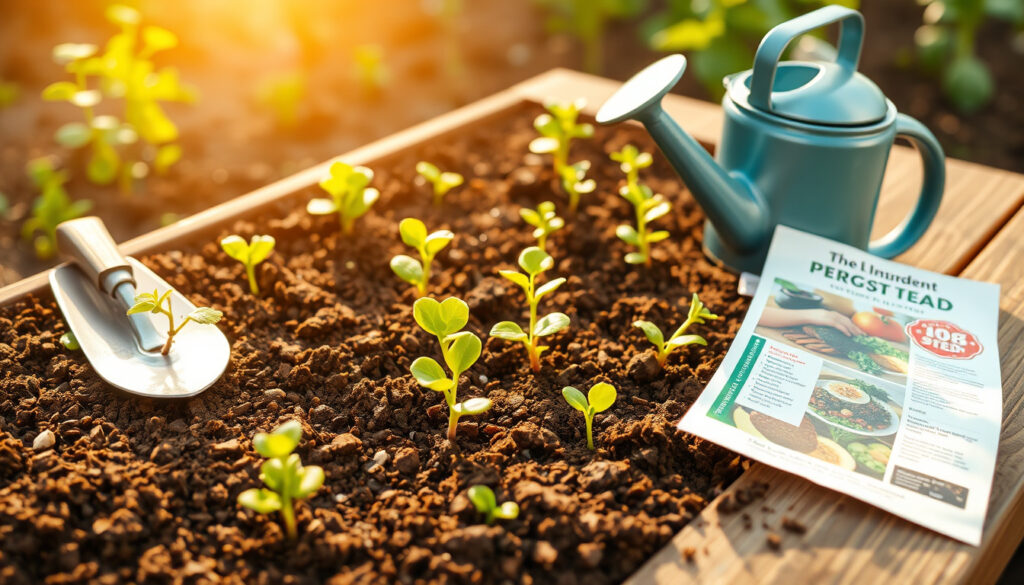
How to Start a Garden: Step-by-Step Beginner Guide
You’ve probably stood in a garden center, stared at rows of seed packets, and wondered if you actually have what it takes to grow something. The good news: starting a garden doesn’t require a green thumb or a lot of space — with a few evidence-backed decisions like picking the right spot and preparing the soil properly, you can set yourself up for success from day one.
- Choose a site with 6+ hours of direct sun – most vegetables need at least this amount (University of Wisconsin-Madison Extension).
- Remove grass and weeds – use cardboard or solarization to smother vegetation (Wisconsin Extension).
- Test your soil – a $10–$20 test through your local extension office reveals pH and nutrient levels (University of Illinois Extension).
- Add compost – work 2–3 inches of organic matter into the soil to improve structure (Wisconsin Extension).
- Pick 3–5 beginner-friendly vegetables – lettuce, radishes, beans, zucchini, and tomatoes are ideal (University of Maryland Extension).
- Plant at the right time – after the last frost for warm-season crops, 4–6 weeks before for cool-season crops (NC State Extension).
New gardeners in the US each year: approximately 18 million ·
Portion of US households with a food garden in 2024: 35% ·
Minimum hours of sunlight needed for a vegetable garden: 6 hours per day ·
Average start-up cost for a small raised bed garden: $100–$200 ·
Best planting window for spring gardens in temperate zones: March–May ·
Percentage of beginner gardeners who abandon within one season: up to 60%
Quick snapshot
- Most vegetables need at least 6 hours of direct sun daily (University of Wisconsin-Madison Extension)
- Overcrowding is the #1 mistake new gardeners make (RHS (Royal Horticultural Society))
- Spring planting after last frost gives warm-season crops the best start (NC State Extension)
- Exact abandonment rate varies by region and study (60% is an upper estimate) (RHS (Royal Horticultural Society))
- Optimal soil pH for all vegetables is 6.0–7.0, but some crops tolerate more acid or alkaline conditions (University of Illinois Extension)
- The best planting month varies by USDA zone and microclimate (NC State Extension)
- Late winter: order seeds, test soil, plan layout (NC State Extension)
- Early spring: prepare beds, plant cool-season crops (NC State Extension)
- Late spring: plant warm-season after last frost (NC State Extension)
- Summer: water, weed, harvest, watch for pests (NC State Extension)
- Fall: plant garlic, onions, winter greens; clean up (NC State Extension)
- Pick a site with 6+ hours of sun (University of Wisconsin-Madison Extension)
- Remove grass and test your soil (University of Illinois Extension)
- Add compost and choose 3–5 beginner-friendly vegetables (University of Maryland Extension)
- Plant at the right time for your region (NC State Extension)
Six key facts, one pattern: the most common failure points are all avoidable with a little planning and the right information.
| Fact | Detail |
|---|---|
| Garden start-up cost | Average $100–$200 for raised bed setup |
| Sunlight requirement | Minimum 6 hours direct sun daily |
| Best vegetables for beginners | Lettuce, radishes, beans, zucchini, tomatoes |
| Best month to plant | March–May (spring), September (fall) |
| Common mistake rate | 60% of new gardeners abandon within one season |
| Soil test cost | $10–$20 through local extension office |
What is the easiest way to start a garden?
Start small with a raised bed or container
The easiest way to start a garden is to keep it tiny. A 4×4-foot raised bed or a few large containers are enough to grow a satisfying harvest. University of Wisconsin-Madison Extension (horticultural research) recommends starting with less than 100 square feet. The RHS (Royal Horticultural Society) notes that beginners who limit themselves to 3–5 vegetable varieties are far more likely to succeed than those who try to grow everything at once.
Choose easy vegetables like lettuce, radishes, and beans
Some crops are famously forgiving. Lettuce, radishes, beans, zucchini, and tomatoes are the most recommended for first-time gardeners by University of Maryland Extension (agricultural extension). They germinate quickly, resist pests, and produce a visible harvest within weeks — which keeps motivation high.
Use quality potting soil and water consistently
Container gardens need a high-quality potting mix, not garden soil. New York Botanical Garden (horticultural institution) advises that containers dry out faster, so check moisture daily. The NC State Extension (university extension) recommends watering deeply but less often to encourage strong root growth.
Starting small isn’t just about managing labor — it’s about building confidence. The first-time gardener who succeeds with three crops is far more likely to expand next year than the one who planted a dozen and got overwhelmed.
How do I prepare a garden for the first time?
Select a site with 6+ hours of direct sunlight
Sunlight is the single most important factor. University of Wisconsin-Madison Extension (horticultural research) states that most vegetables need at least 6 hours of direct sunlight daily, and many fruiting crops like tomatoes and squash perform better with 8–10 hours. University of Maryland Extension (agricultural extension) agrees, adding that the site should be on level ground with good drainage.
Remove grass and weeds manually or with solarization
Grass competes fiercely with young plants. Wisconsin Extension recommends removing existing vegetation as the first step. Covering the cleared area with cardboard or black plastic for a few weeks smothers any remaining weeds — a simple, chemical-free method called solarization.
Test soil pH and amend with organic matter
A soil test tells you what you’re working with. University of Illinois Extension (soil science) recommends testing every 3–5 years, ideally in the fall when soil temperatures are still above 50°F. Most vegetables prefer a pH between 6.0 and 7.0. Adding 2–3 inches of compost — as advised by Wisconsin Extension — improves both water retention in sandy soil and drainage in clay soil.
Plan irrigation access
New gardens need consistent water. A soaker hose or drip irrigation on a timer saves time and prevents overwatering. New York Botanical Garden (horticultural institution) notes that spring soil preparation should begin when the ground is moist but not soggy to avoid compaction.
Site preparation is the single most important determinant of garden success, according to UNH Extension (university extension). Skipping the soil test or planting in a shady spot is the fastest way to disappointment — and the reason up to 60% of new gardeners give up within one season.
What is the best month to start a garden?
Spring: March to May for most temperate regions
The spring planting window — after the last frost date — is the best time for warm-season crops like tomatoes, peppers, and cucumbers. NC State Extension (university extension) advises planting cool-season crops (lettuce, peas, carrots) 4–6 weeks before the last frost, and warm-season crops after the danger of frost has passed.
Fall: September for cool-season crops
Autumn is ideal for leafy greens, root vegetables, and planting garlic. University of Maryland Extension (agricultural extension) notes that spinach and kale survive light frosts and can be planted in September–October in many climates.
Check your local frost dates
Your local extension office or a simple online lookup will tell you the average last spring frost and first fall frost dates for your area. NC State Extension recommends orienting rows north-to-south on flat land for maximum sunlight exposure.
Planting too early risks frost killing your seedlings; planting too late shortens the growing season and reduces yield. The difference between a successful first garden and a frustrating one often comes down to checking a single date: your local last frost.
What is the most common mistake of first time gardeners?
Planting too much, too close together
Overcrowding is the #1 mistake, according to the RHS (Royal Horticultural Society). When plants are squeezed together, they compete for sunlight, water, and nutrients. Yields drop, and disease spreads faster. NC State Extension recommends placing tall crops and trellised vines on the north side so they don’t shade shorter plants.
Overwatering or underwatering
Many beginners kill seedlings by watering too often. New York Botanical Garden (horticultural institution) recommends the “touch test” — stick your finger an inch into the soil; if it feels dry, water. Wisconsin Extension adds that well-drained soil should have no standing water after heavy rain.
Ignoring local soil and climate conditions
Gardeners who follow generic advice without checking their own soil type or climate zone often struggle. University of Illinois Extension (soil science) stresses that a $10–$20 soil test through your local extension office reveals exactly what amendments your garden needs.
The most common mistake isn’t any single action — it’s the assumption that more is better. More seeds, more water, more fertilizer. The evidence shows that beginners succeed by doing less, but doing it right.
Is October too late to plant?
Yes for warm-season crops, no for garlic, onions, and winter greens
October is too late for tomatoes, peppers, and squash in most temperate climates — they won’t have time to mature before frost. But it’s the perfect time for garlic, which NC State Extension (university extension) says will mature by next summer. Onions, spinach, and kale also tolerate light frosts and can be planted in September–October.
Use row covers or cold frames to extend the season
Lightweight fabric row covers or a simple cold frame can protect cool-season crops from early frosts, giving you several extra weeks of harvest. New York Botanical Garden (horticultural institution) notes that spinach and kale actually improve in flavor after a light frost.
Plant spring bulbs and perennials now
October is also the time to plant spring-blooming bulbs like tulips and daffodils, as well as perennial herbs such as chives and oregano. University of Maryland Extension (agricultural extension) recommends mulching bulb beds after planting to insulate the soil.
Timeline signal
- Late winter (Feb–Mar): Order seeds, test soil, plan layout (NC State Extension)
- Early spring (Mar–Apr): Prepare beds, plant cool-season crops (NC State Extension)
- Late spring (May): Plant warm-season crops after last frost (NC State Extension)
- Summer (Jun–Aug): Water, weed, harvest, monitor for pests (NC State Extension)
- Fall (Sep–Oct): Plant garlic, onions, winter greens; clean up spent plants (NC State Extension)
Clarity section
Confirmed facts
- Sunlight requirement: 6+ hours per day (USDA, UNH Extension)
- Overcrowding is the #1 mistake (RHS, multiple extension sources)
- Spring planting window after last frost is optimal for warm-season crops
What’s unclear
- Exact abandonment rate varies by region and study (60% is an upper estimate)
- Optimal soil pH for all vegetables: 6.0–7.0, but some crops tolerate more acid or alkaline
Expert perspectives
“Starting small and planning your garden layout on paper first can save you a whole season of frustration.”
— RHS Horticultural Advisor, RHS Beginner’s Guide
“Site preparation is the single most important determinant of garden success. Take the time to test your soil and amend it before you plant a single seed.”
— UNH Extension Vegetable Specialist, UNH Extension
“The most important thing you can do for your garden is pick the right location. If you don’t have 6 hours of sun, don’t try to grow vegetables — grow shade-tolerant ornamentals instead.”
— Gardenary Founder, Gardenary Blog
The evidence is clear: gardening success isn’t about luck or a green thumb — it’s about three decisions made before you ever put a seed in the ground: choosing a sunny spot, testing and amending your soil, and planting at the right time. For the first-time gardener in the US, the cost of a soil test ($10–$20) and a few bags of compost is a fraction of the price of a season of disappointment. The choice is simple: invest a little time upfront, or join the 60% who abandon the hobby before they ever taste their own tomato.
journeywithjill.net, homesteadandchill.com, libguides.nybg.org, facebook.com, gardeners.com, facebook.com, ask.extension.org, fieldreport.caes.uga.edu
Frequently Asked Questions
Do I need to till my garden soil?
Not necessarily. Many extension services, including Wisconsin Extension, recommend no-till methods that preserve soil structure. If your soil is heavily compacted, a single tilling with plenty of compost may help, but avoid over-tilling.
How deep should a raised garden bed be?
At least 6–8 inches for shallow-rooted crops like lettuce, and 12 inches for deeper-rooted plants like tomatoes. University of Maryland Extension recommends 8–12 inches for most vegetables.
Can I use garden soil in containers?
No. Garden soil is too heavy for pots and can harbor diseases. Use a high-quality potting mix designed for containers, as recommended by New York Botanical Garden.
What is the best fertilizer for a new vegetable garden?
Start with compost. If your soil test shows deficiencies, a balanced 10-10-10 granular fertilizer is a safe choice. Illinois Extension advises against over-fertilizing — too much nitrogen creates leafy growth at the expense of fruit.
How often should I water my garden in hot weather?
Deep watering 2–3 times per week is better than light daily watering. NC State Extension recommends watering in the morning to reduce evaporation and disease risk.
Should I use mulch in my first garden?
Yes. A 2–3 inch layer of organic mulch (straw, shredded leaves, or wood chips) conserves moisture, suppresses weeds, and moderates soil temperature. Wisconsin Extension recommends applying mulch after the soil has warmed in spring.
How do I keep squirrels out of my garden?
Physical barriers like netting or row covers are most effective. RHS suggests using bird netting secured at ground level, or planting a separate “decoy” patch of sunflowers away from your vegetables.
When will I see results from my garden?
Radishes can be ready in 25–30 days, lettuce in 30–60 days, and tomatoes in 60–80 days from transplant. NC State Extension notes that fast-growing crops like radishes and beans give beginners early confidence.
More related posts
 Popeyes Kallang Wave Mall: Menu, Prices, Hours & More
 SG60 Vouchers Where to Use: Rules, Expiry, & FAQs 2025
 D-Wave Share Price Analysis: Buy, Sell or Hold? (QBTS Stock)
 Feng Sheng Chicken Rice: 24-Hour Kampong Chicken & Steamboat
 Love Language Test Free: Instant Results No Signup
 Shaw Centre Parking Rates 2025: Compare Orchard Mall Prices
 Bukit Panjang Plaza Directory: Shops, Owner & Transport
 STD Testing Near Me: Free vs Paid in Ireland