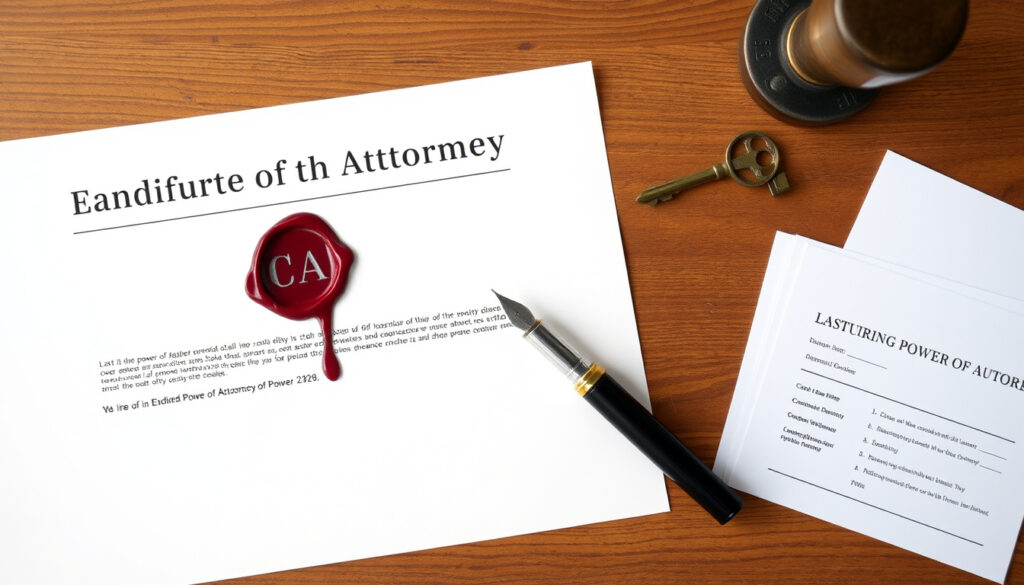
Lasting Power of Attorney vs EPA: UK & Ireland Guide
Losing mental capacity is unsettling, but a power of attorney offers strong protection. We compare the UK’s Lasting Power of Attorney (LPA) with Ireland’s Enduring Power of Attorney (EPA), covering costs, registration steps, and who to choose as your attorney. By the end, you’ll know which option fits your situation and how to get started.
LPA registration fee (England & Wales): £92 (GOV.UK) ·
LPA processing time: 8–10 weeks (GOV.UK) ·
LPA types: Personal welfare & Property and affairs (GOV.UK) ·
EPA registration trigger: Upon loss of mental capacity (Coyne Solicitors)
Quick snapshot
- LPAs and EPAs must be registered before use (GOV.UK)
- Donor must be 18+ and have mental capacity when making the document (GOV.UK)
- Attorney can be a family member, friend, or professional (GOV.UK)
- Exact processing times vary depending on workload of registration bodies
- Whether an LPA made in the UK is valid in Ireland requires legal verification
- The total number of EPAs registered in Ireland annually is not publicly detailed
- UK LPA registration: 8–10 weeks (GOV.UK)
- Ireland EPA registration: triggered when donor loses capacity, processing time varies (GOV.UK)
- Northern Ireland EPA: must be registered once capacity declines (MoneyHelper)
- Choose your attorney(s) and discuss your wishes
- Complete the appropriate form (LPA1 for UK, EPA form for Ireland)
- Register with the relevant authority (OPG or DSS)
| Label | Value |
|---|---|
| Legal term in Ireland | Enduring Power of Attorney (EPA) |
| Legal term in UK (England & Wales) | Lasting Power of Attorney (LPA) |
| Registration body (Ireland) | Decision Support Service (DSS) |
| Registration body (UK) | Office of the Public Guardian (OPG) |
| Minimum age of donor | 18 (both jurisdictions) |
| LPA registration fee (England & Wales) | £92 per LPA (GOV.UK) |
| LPA processing time (England & Wales) | 8–10 weeks (GOV.UK) |
| EPA registration trigger (Ireland) | When donor becomes or is becoming mentally incapacitated |
| Attorney eligibility | Individual aged 18+ with capacity, not bankrupt (varies by jurisdiction) |
What is a lasting power of attorney in Ireland?
Understanding the term ‘lasting power of attorney’ vs ‘enduring power of attorney’
- In Ireland, the correct legal term is Enduring Power of Attorney (EPA), not “lasting power of attorney.” The UK uses Lasting Power of Attorney (LPA) for England and Wales.
- Both documents allow you (the donor) to appoint someone (an attorney) to manage your affairs if you lose mental capacity.
- The key difference: an LPA can be used from the moment it’s registered (with your consent), while an EPA only becomes effective when you lack capacity.
The implication: if you search for “lasting power of attorney Ireland,” you’re actually looking for an EPA. The terminology matters because the wrong form could delay your application.
Legal basis in Ireland: the Decision Support Service
- The Decision Support Service (DSS) is the Irish authority that registers and oversees EPAs, operating under the Assisted Decision-Making (Capacity) Act 2015.
- An EPA must be registered with the DSS once the donor is becoming or has become mentally incapacitated (Coyne Solicitors).
- Before registration, the donor can still make decisions; the attorney cannot act until the EPA is registered.
The catch: unlike the UK, where you can register an LPA immediately, the Irish system delays the attorney’s power until capacity is lost — a safeguard, but also a potential gap if the donor loses capacity suddenly.
Key features of an EPA
- You can appoint one or more attorneys, and you can also name a replacement attorney.
- An EPA typically covers financial and property decisions; personal welfare decisions require a separate arrangement.
- The EPA must be witnessed by a solicitor or a notary (Hugh McGroddy Notary).
Who is the best person to be your power of attorney?
Qualities to look for in an attorney
- Trustworthiness — the attorney will have access to your finances and potentially your health decisions.
- Financial competence — they should understand budgeting, tax, and investment basics.
- Reliability — someone who will act in your best interests, not their own.
What this means: choosing an attorney is not a popularity contest. The person should be willing to take on the responsibility and have the time to manage it.
Can a family member be your attorney?
- Yes — a spouse, adult child, or sibling are common choices.
- However, family dynamics can create conflicts of interest, especially if other relatives disagree with decisions.
- It’s wise to discuss your wishes with the person before appointing them.
What about a professional (solicitor, accountant)?
- Professionals such as solicitors or accountants can act as attorneys, often for a fee.
- They bring expertise and impartiality, but may charge for their services (typically €200–€500 in Ireland).
- In the UK, a professional attorney can be appointed, but they must follow the same legal duties.
The catch: a family member costs nothing but may lack skills; a professional costs money but brings reliability. Many people appoint a family member as primary attorney and a professional as backup.
Do you need a solicitor for power of attorney in Ireland?
Steps to set up an EPA without a solicitor
- Download the EPA form from the Decision Support Service website.
- Complete the form, choose your attorney(s), and sign it in the presence of a witness (who must be a solicitor or notary).
- Notify the donor and notice parties (e.g., your spouse and children) of the application.
The catch: while the form is free, the witness requirement still means you’ll need a solicitor or notary — so a fully DIY execution is not possible. You’ll at least pay a witness fee.
Why you might still want legal advice
- Solicitors can ensure the document is correctly executed and witnessed, reducing the risk of rejection.
- They can advise on complex situations, such as joint assets, business interests, or cross-border property.
- In Ireland, a solicitor must certify the donor’s capacity and witness the signing (Coyne Solicitors).
Why this matters: a mistake in the form can delay registration by months, and in some cases, the EPA may be invalidated.
Cost comparison: DIY vs solicitor-assisted
- DIY: no solicitor fee, but you still pay for witness (€20–€50) and the DSS registration fee (currently €100).
- Solicitor-assisted: total cost typically €500–€1,500, including drafting, witnessing, and registration (Coyne Solicitors).
- In the UK, LPA registration is £92 per LPA (GOV.UK), and solicitor fees add another £150–£300.
The pattern: the cheapest route is to use the free forms and only pay for essential witnessing and registration. But for peace of mind, many people opt for solicitor assistance.
Which is best, power of attorney or lasting power of attorney?
Key differences between ordinary POA and LPA/EPA
- An ordinary (general) power of attorney ends as soon as the donor loses mental capacity.
- A lasting power of attorney (LPA) or enduring power of attorney (EPA) continues after capacity is lost.
- Therefore, for long-term planning, an LPA or EPA is essential — a general POA leaves you unprotected.
The implication: if you’re over 50 or have a health condition that could affect your capacity, a general POA is not enough. You need a lasting/enduring document.
When a simple POA might be sufficient
- If you only need someone to handle a specific transaction (e.g., selling a house while you’re abroad), a general POA works.
- If you are in good health and just want a safety net, an LPA/EPA is still recommended because it covers future incapacity.
Why lasting/enduring powers are more comprehensive
- An LPA can cover both property/financial affairs and health/welfare decisions (you need two separate LPAs in England & Wales).
- An EPA in Ireland covers property and financial matters; health decisions require a separate advance healthcare directive.
- Both types allow you to impose restrictions on the attorney’s powers.
What this means: for most people, the flexibility of an LPA/EPA outweighs the simplicity of a general POA. The extra cost and paperwork are a small price for long-term security.
How much does it cost to do a power of attorney in Ireland?
Application fees for EPA in Ireland
- The Decision Support Service charges a registration fee of €100 (as of 2025).
- There is no fee for downloading the form or for the initial notification.
Solicitor fees for drafting and registration
- Typical solicitor fees for an EPA in Ireland range from €200 to €500 for a straightforward case.
- More complex estates (e.g., property in multiple jurisdictions) can cost €800–€1,500 (Coyne Solicitors).
Hidden costs: witness fees, certification, etc.
- Witnessing by a solicitor or notary: typically €20–€50.
- Medical certification if required: may cost €50–€100.
- In the UK, reduced fees are available for people on low income: £46 instead of £92 (MoneySavingExpert).
The pattern: the cheapest route in Ireland is DIY with a witness, costing around €120–€150 total. But if you need legal advice, budget at least €500.
How to make, register or end a lasting power of attorney
Step-by-step: making an LPA in the UK
- Choose your attorney(s) and decide whether to make a Property & Financial Affairs LPA, a Health & Welfare LPA, or both.
- Complete the LPA1 form (available on GOV.UK).
- Sign the form in the correct order: donor first, then certificate provider, then attorneys.
- Send the form to the Office of the Public Guardian (OPG) with the £92 fee.
- Wait for registration confirmation (8–10 weeks).
Step-by-step: making an EPA in Ireland
- Download the EPA form from the Decision Support Service website.
- Choose your attorney(s) and notify your spouse, children, and other notice parties.
- Sign the form in the presence of a solicitor or notary, who must also sign as witness.
- Keep the signed EPA somewhere safe. Do not register it yet — only register when the donor becomes or is becoming mentally incapacitated.
- When needed, register the EPA with the DSS by submitting the form, a medical certificate, and the €100 fee.
How to register a document
- UK: LPA must be registered with the OPG before it can be used. Use the online portal or postal forms.
- Ireland: EPA must be registered with the DSS when capacity is declining. The process includes notifying the donor and notice parties, providing medical evidence, and paying the fee (Coyne Solicitors).
- Northern Ireland: EPA can be used without registration while the donor has capacity, but must be registered once capacity starts to decline (MoneyHelper).
How to cancel or end a power of attorney
- You can revoke an LPA or EPA at any time while you still have mental capacity, by completing a deed of revocation.
- If the attorney dies, becomes bankrupt, or loses capacity, the LPA/EPA ends unless a replacement attorney is appointed.
- A court order can also revoke a power of attorney if the attorney is acting improperly.
Comparison table: UK LPA vs Ireland EPA
Five key differences emerge between the two systems, with the UK offering more flexibility and Ireland adopting a more cautious approach.
| Feature | UK LPA (England & Wales) | Ireland EPA |
|---|---|---|
| Name | Lasting Power of Attorney | Enduring Power of Attorney |
| Registration body | Office of the Public Guardian (OPG) | Decision Support Service (DSS) |
| Registration trigger | Immediately after creation (can be used with donor’s consent) | Only when donor becomes mentally incapacitated |
| Registration fee | £92 per LPA | €100 |
| Types available | Property & Financial Affairs; Health & Welfare (two separate LPAs) | Typically covers property and financial affairs only |
| Witness requirement | Certificate provider (anyone who knows the donor well) + attorney signatures | Solicitor or notary public |
| Processing time | 8–10 weeks (GOV.UK) | Varies, typically 6–10 weeks after submission |
| Can be used while donor has capacity? | Yes, with donor’s consent | No, only after registration (when capacity is lost) |
Pros and cons of LPA/EPA
Upsides
- Provides peace of mind that someone you trust can manage your affairs if you lose capacity.
- Can be tailored to your specific needs (e.g., restrictions on property sales).
- Relatively low cost compared to full guardianship or court-appointed management.
- In the UK, you can use the LPA immediately for convenience.
Downsides
- Registration fees can add up, especially if you need both types of LPA (£184 total).
- Choosing the wrong attorney can lead to financial abuse.
- In Ireland, the EPA is not usable until capacity is lost, which may leave a gap if you need help earlier.
- Cross-border validity is uncertain — an LPA made in the UK may not be accepted in Ireland.
Quotes from official sources
“An enduring power of attorney (EPA) is a legal device that can be set up by a person (the donor) to allow another person (an attorney), to look after their affairs if they become mentally incapable.”
— Citizens Information (Ireland’s official public service information provider)
“A lasting power of attorney (LPA) is a legal document that lets you (the ‘donor’) appoint one or more people (known as ‘attorneys’) to help you make decisions or to make decisions on your behalf.”
— GOV.UK (the UK government’s official guidance)
Summary
If you live in England or Wales, the LPA gives you flexibility and immediate use. If you are in Ireland, the EPA is your only option, with a delayed activation that protects you but requires careful timing. For anyone with assets in both jurisdictions, you will likely need separate documents, and you should seek legal advice to ensure cross-border validity. For the Irish reader, the decision is straightforward: plan ahead, use the free EPA form, and register it only when necessary — but do not wait until it is too late.
mpestateplanning.uk, speakforme.co.uk, devonalds.co.uk, youtube.com, payingforcare.org, powerofattorneyonline.co.uk, carehome.co.uk
Frequently asked questions
Can I have more than one attorney in an LPA or EPA?
Yes, you can appoint multiple attorneys, and you can specify whether they must act jointly (together) or jointly and severally (independently). This is allowed in both the UK and Ireland.
What happens if my attorney dies or becomes unable to act?
If you named a replacement attorney, they step in. If not, the LPA or EPA may become invalid, and you would need to make a new one while you still have capacity. In Ireland, the court may appoint a substitute.
Can a lasting power of attorney be revoked?
Yes, you can revoke an LPA or EPA at any time as long as you have mental capacity. You must complete a deed of revocation and notify the relevant authority (OPG or DSS).
Is a lasting power of attorney valid in another country?
Not automatically. An LPA made in the UK is not automatically valid in Ireland or other EU countries. You may need to create a separate power of attorney under local law. Always seek legal advice for cross-border situations.
What is the difference between a property and affairs LPA and a health and welfare LPA?
A property and affairs LPA covers financial decisions (bank accounts, bills, selling property). A health and welfare LPA covers medical care, living arrangements, and day-to-day care. Both are needed for comprehensive coverage.
Do I need a separate LPA for property and for health?
In England and Wales, yes — you must make two separate LPAs if you want both areas covered. In Ireland, the EPA typically covers only property and financial affairs; health decisions require a separate advance healthcare directive.
How long does it take to register an EPA in Ireland?
Once the application is submitted to the Decision Support Service, processing typically takes 6 to 10 weeks, but this can vary depending on workload and whether the application is complete and error-free.
What happens if the donor regains mental capacity?
If the donor regains capacity, the EPA can be cancelled if the donor is able to manage their own affairs again. The attorney must stop acting, and the EPA can be revoked with the consent of the DSS.
The UK system lets you use your LPA immediately after registration, while Ireland delays activation until mental capacity is lost — a difference that shapes your planning timeline.
If you hold assets in both Ireland and the UK, you will likely need separate documents for each jurisdiction. Cross-border validity is not automatic.
More related posts
 General Election 2025 Results – PAP Wins 87 Seats, WP Holds 10
 Arsenal Transfer News Latest – 2026 Targets and Rumours
 Shaw Centre Parking Rates 2025: Compare Orchard Mall Prices
 Alcon Tears Naturale Free: Uses, Dosage & Side Effects
 Kim Sun-young Actress: Bio, Roles, Family, K-Dramas
 Part Time Helper Singapore: Rates, Legality & Best Services 2026
 Brighton & Hove Albion vs Tottenham: Head-to-Head Stats
 Kiztopia Club @ Punggol Reviews: Is It Worth Your Money