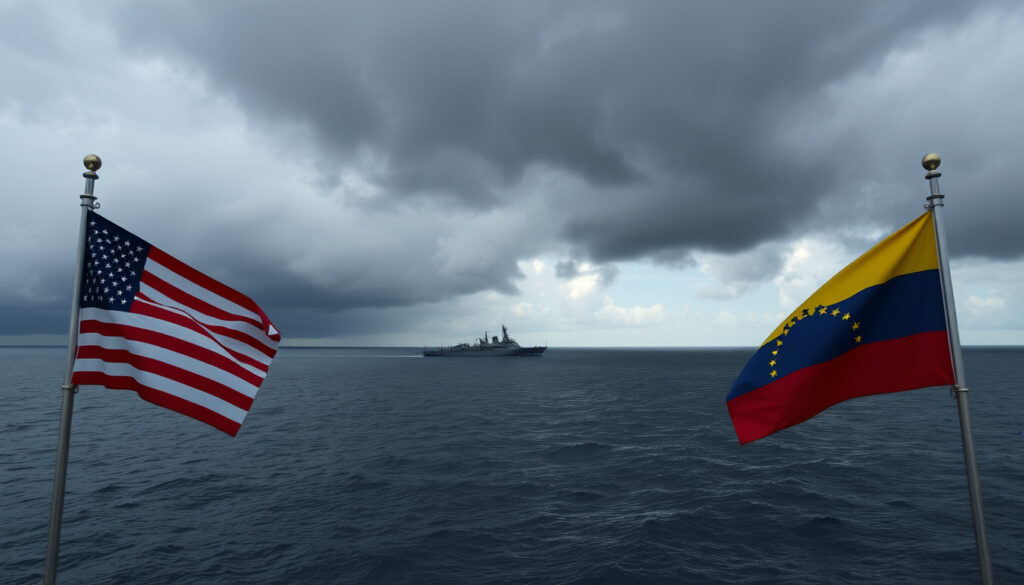
Why Is US Attacking Venezuela – Separating Facts From Rumors
Tensions between Washington and Caracas have escalated dramatically since 2024, fueling widespread confusion about whether the United States is actively attacking Venezuela. Reports of military strikes, economic sanctions, and political pressure have circulated widely, leaving many readers seeking clarity on the facts. This investigation separates verified developments from speculation, drawing on documented U.S. policy actions, international responses, and statements from official sources.
The situation has grown increasingly complex, involving disputed elections, allegations of drug trafficking, territorial disputes, and competing geopolitical interests. Understanding what the United States has actually done—and what remains contested—requires a careful review of the timeline, policy decisions, and international reactions that have shaped this conflict.
Is the US Attacking Venezuela?
The question of whether the United States is actively attacking Venezuela requires precise distinction between different forms of pressure. As of early 2026, the reality combines economic sanctions, military posturing, and one direct intervention that captured the sitting president.
Fact: No conventional invasion, but sanctions and one direct operation in January 2026
Fact: Escalation driven by election fraud allegations and drug trafficking claims
Fact: Sanctions, bounties, and military demonstrations as primary tools
Fact: Government denounces actions as unlawful intervention
Key Insights
- The United States has not launched a conventional military invasion of Venezuela, but has deployed significant military assets in the region
- Economic sanctions remain the primary tool of U.S. pressure, targeting Maduro government officials and the Venezuelan oil sector
- In January 2026, U.S. special operations forces conducted “Operation Absolute Resolve,” capturing President Nicolás Maduro
- The disputed July 2024 presidential election served as the immediate catalyst for intensified U.S. action
- Russia and China have continued supporting the Maduro government, complicating U.S. objectives
Quick Facts
| Fact | Details | Source |
|---|---|---|
| Maduro capture | U.S. forces captured Maduro and Cilia Flores in January 2026 under “Absolute Resolve” operation | CFR Global Conflict Tracker |
| Election dispute | July 28, 2024 presidential election results declared fraudulent by the U.S. | Wikipedia – Sanctions during Venezuelan crisis |
| September 2025 strike | Navy strike on Tren de Aragua vessel killed eleven people | CFR Global Conflict Tracker |
| Secret directive | August 2025 directive authorized military force against Latin American cartels | CFR Global Conflict Tracker |
| Sanctions timeline | 16 individuals sanctioned September 2024; 21 more in November 2024 | Wikipedia – Sanctions during Venezuelan crisis |
| Bounty on Maduro | $50 million U.S. bounty for Maduro’s capture | CFR Global Conflict Tracker |
| Oil waivers | Chevron, Repsol, Eni, Maurel & Prom, BP received operational waivers | Wikipedia – Sanctions during Venezuelan crisis |
| Naval deployment | Fleet of warships with 4,500 sailors and Marines deployed toward Venezuelan waters | CFR Global Conflict Tracker |
Why Is the US Involved in Venezuela?
Historical Context of US-Venezuela Relations
U.S. involvement in Venezuelan affairs did not begin with the 2024 election crisis. Washington has long viewed Venezuela through the lens of oil interests, regional stability, and ideological competition. The fall of Venezuelan oil production under Chávez and later Maduro reduced direct economic leverage, shifting U.S. policy toward sanctions and diplomatic pressure.
The Trump administration’s approach reflected a broader “maximum pressure” strategy similar to Iran, combining economic strangulation with criminal indictments targeting government officials. The specific allegations centered on Maduro’s alleged direct involvement in drug trafficking through the Tren de Aragua cartel.
Venezuela’s Accusations Against the United States
The Venezuelan government has consistently characterized U.S. actions as imperial aggression, violating principles of national sovereignty. Following the September 2025 naval strike and the January 2026 capture of Maduro, Caracas framed these actions as unlawful acts of war.
Venezuela’s foreign ministry issued statements condemning what it described as illegal use of force, arguing that maritime interdiction operations lacked proper legal basis without Coast Guard involvement or imminent threat justification.
The September 2025 naval strike that killed eleven people on a suspected cartel vessel has drawn legal scrutiny. Lethal force authorization during maritime interdictions typically requires an imminent threat, a condition some legal analysts question was met in this case.
Why Is the US Against Maduro?
The U.S. position against Maduro stems from multiple converging factors. The 2024 election dispute, where electoral authorities declared Maduro the winner without producing verifiable vote tallies, intensified longstanding grievances over democratic governance.
Drug trafficking allegations form another pillar. U.S. prosecutors have alleged Maduro’s direct involvement in cocaine smuggling operations, forming the basis for both the $50 million bounty and the narco-terrorism charges filed in New York following his capture.
What Are the Main US Actions Against Venezuela?
Economic Sanctions Framework
The United States has deployed an extensive sanctions regime targeting Venezuela’s economy and key government figures. These measures restrict financial transactions, freeze assets, and prohibit most business dealings with designated individuals and entities.
The sanctions architecture has evolved through distinct phases. Initial measures targeted individuals and financial institutions, while later expansions focused on the critical oil sector and Venezuela’s debt transactions. Families affected by these measures may benefit from understanding available government assistance programs during periods of economic instability.
Military Posturing and Naval Deployment
Beyond sanctions, the Trump administration significantly expanded military presence near Venezuelan waters. A fleet of naval warships carrying more than 4,500 sailors and Marines operated in the Caribbean and Atlantic approaches to Venezuela, signaling potential readiness for enforcement operations.
In August 2025, a secret directive authorized the Pentagon to use military force against designated Latin American drug cartels operating in the region, extending operational latitude beyond traditional law enforcement parameters.
Support for Venezuelan Opposition
The United States has historically backed opposition figures, most notably María Corina Machado, whose presidential candidacy was blocked by Maduro’s government. Washington condemned the disqualification of opposition candidates as inconsistent with democratic norms.
However, President Trump later rejected explicit backing for the democratic opposition led by Machado, creating apparent contradictions in stated U.S. policy objectives.
The Trump administration’s approach has shown internal inconsistencies. While Secretary of State Marco Rubio suggested enforcing an oil quarantine and maintaining military pressure, Trump simultaneously lifted sanctions on interim President Delcy Rodríguez and described her as a “joint-venture partner.”
What Is the Current Status of US-Venezuela Relations?
The January 2026 Operation and Its Aftermath
In early January 2026, the United States executed “Operation Absolute Resolve,” deploying Delta Force special operations troops with CIA intelligence support to conduct large-scale military strikes on Caracas and surrounding areas. The operation resulted in the capture of President Nicolás Maduro and his wife Cilia Flores.
Both individuals were transported to New York, where they faced arraignment on charges including narco-terrorism, cocaine importation conspiracy, and possession of machine guns. Both pleaded not guilty to the allegations.
Regional Power Dynamics Under New Leadership
Following Maduro’s capture, Vice President Delcy Rodríguez assumed the role of interim president. Authorities declared a national state of emergency, and security forces began intensified patrols throughout Caracas. The political landscape shifted dramatically as a new leadership structure took shape.
The Trump administration offered seemingly contradictory signals about its intentions. While claiming the United States would “run” Venezuela, officials provided conflicting statements regarding future military involvement and political support structures.
International Actors and Geopolitical Positioning
Russia and China have maintained their support for the Venezuelan government despite U.S. pressure. Moscow sent troops to Venezuela in March 2019 and has assisted the government in evading oil sanctions through alternative financing mechanisms and trade arrangements.
Beijing has extended offers to help rebuild Venezuela’s national power grid, which has suffered extensive degradation under years of economic mismanagement and U.S. sanctions. This assistance strengthens Chinese influence while providing Caracas with critical infrastructure support.
On April 1, 2026, the Treasury Department eased sanctions allowing U.S. companies to conduct business with Venezuela’s state oil firm. A 60-day Jones Act waiver was also announced to permit non-U.S.-flagged vessels to transport goods between domestic ports, reflecting efforts to stabilize oil prices amid concurrent tensions with Iran.
Timeline of US-Venezuela Tensions
- – Russia sent troops to Venezuela, signaling international support for the Maduro government
- – U.S. reinstated certain sanctions after determining the Barbados Agreement had not been honored
- – Disputed presidential election; National Electoral Council declared Maduro winner
- – U.S. sanctioned 16 individuals associated with Maduro and post-election repression
- – Additional 21 senior Maduro government officials sanctioned
- – Secret directive authorized military force against Latin American drug cartels
- – U.S. Navy struck Tren de Aragua vessel, killing eleven people
- – Operation Absolute Resolve captured Maduro and Cilia Flores
- – Sanctions lifted on Delcy Rodríguez; Treasury eased restrictions on state oil firm
Facts vs. Rumors: What We Know and What Remains Unclear
| Established Information | Information That Remains Unclear |
|---|---|
| Sanctions have been imposed on Venezuelan officials since 2024 | Specific legal basis for the January 2026 military operation under international law |
| Maduro was captured and arraigned in New York on drug trafficking charges | Details of intelligence coordination between CIA and Delta Force |
| The July 2024 election results were disputed and condemned as fraudulent by the U.S. | Long-term political stability following the transition of power |
| Russia and China have provided ongoing support to Venezuela | Whether lifting sanctions on Rodríguez signals permanent policy shift |
| Naval warships with 4,500 sailors were deployed near Venezuelan waters | Exact scope of remaining U.S. military presence in the region |
| Oil waivers were granted to Chevron, Repsol, Eni, and others | Future of Venezuelan oil production under new government structures |
Background and Analysis
The US-Venezuela conflict represents a convergence of multiple strategic interests. Beyond the immediate drug trafficking allegations, Washington has maintained concerns about Venezuelan influence in Latin America, the presence of Iranian operatives in the region, and the broader geopolitical competition with Russia and China.
Oil remains a significant factor in the relationship. Venezuela possesses the largest proven crude reserves in the Western Hemisphere, making the country strategically important regardless of ideological orientation. The sanctions regime has sought to pressure the government while preserving limited operational capacity for oil production under carefully controlled waivers.
The territorial dispute over Essequibo between Venezuela and Guyana adds another dimension. While the research provided limited specific information on this angle, the U.S. position has generally aligned with Guyana, viewing Venezuelan territorial claims as destabilizing to regional order.
Official Statements and Sources
“Trump claimed the United States would ‘run’ Venezuela, though the administration offered conflicting statements on future involvement.”
— CFR Global Conflict Tracker
“Trump rejected backing the democratic opposition led by María Corina Machado.”
— CFR Global Conflict Tracker
“Venezuela’s National Electoral Council declared Maduro won without evidence, condemned as fraudulent by the U.S.”
— Wikipedia – Sanctions during the Venezuelan crisis
Summary
The United States is not conducting a conventional military invasion of Venezuela, but has deployed a combination of economic sanctions, naval presence, and targeted military operations. The January 2026 capture of President Maduro marked an unprecedented escalation, resulting in criminal charges being filed in New York. The situation remains fluid, with competing signals from the administration regarding future policy direction. For those tracking government payment updates and their intersection with geopolitical developments, understanding these tensions provides essential context for financial planning in affected regions. For comprehensive information on related government payment schedules, readers may consult Government Payout 2025 Payout Date – SSA, SSI, VA Full Schedule.
Frequently Asked Questions
What happened to Maduro in January 2026?
U.S. special operations forces conducted “Operation Absolute Resolve,” capturing Nicolás Maduro and his wife Cilia Flores. Both were transported to New York and arraigned on charges including narco-terrorism, cocaine importation conspiracy, and possession of machine guns.
Why did the US impose sanctions on Venezuela?
The sanctions were imposed following disputed 2024 presidential elections, allegations of drug trafficking against Maduro, and concerns over democratic governance. The U.S. also cited Venezuela’s failure to honor commitments under the Barbados Agreement.
Has there been a US invasion of Venezuela?
There has been no conventional military invasion. However, the January 2026 operation that captured Maduro involved significant military force, including Delta Force troops and CIA support, launching strikes on Caracas and surrounding areas.
What companies received waivers to operate in Venezuela?
Several major energy companies received waivers allowing them to continue operations despite sanctions, including Chevron, Spain’s Repsol, Italy’s Eni, France’s Maurel & Prom, and BP operating in Trinidad and Tobago.
Which countries support Venezuela against US pressure?
Russia and China have continued supporting the Maduro government. Russia has sent troops and helped Venezuela evade oil sanctions, while China has offered assistance to rebuild the nation’s power grid.
What is the current status of US-Venezuela relations?
Relations have undergone dramatic transformation following Maduro’s capture. Vice President Delcy Rodríguez became interim president, and the U.S. lifted sanctions on her on April 1, 2026, while allowing business with Venezuela’s state oil company.
Were the September 2025 naval strikes legal?
The legal basis for the September 2025 Navy strike that killed eleven people on a suspected cartel vessel has been questioned. Lethal force authorization during maritime interdictions typically requires an imminent threat, a condition some analysts dispute was satisfied.
What happened to the July 2024 Venezuelan election?
The July 28, 2024 presidential election was disputed. Venezuela’s National Electoral Council declared Maduro the winner without producing verifiable vote tallies. The United States condemned the results as fraudulent and intensified sanctions in response.
What is the Tren de Aragua cartel?
Tren de Aragua is a Venezuelan criminal organization involved in drug trafficking and other illicit activities. It became a focal point in U.S. allegations against the Maduro government, with the September 2025 naval strike targeting one of its vessels.
How many people has the US sanctioned in Venezuela?
The U.S. sanctioned 16 individuals in September 2024, including Supreme Tribunal justices and military officials. An additional 21 senior government officials were sanctioned on November 27, 2024, following the disputed election.
More related posts
 10 SGD to IDR – Current Rate, Trends and Conversion Tips
 The Coffee Bean and Tea Leaf Menu – Drinks Food and Prices
 How to Lock Cells in Excel: F4, Freeze Panes & Protection
 Best Books for Personal Growth – Top Expert Recommendations
 Knightsbridge House International School: Fees, Reviews & Ranking
 Sebastian Bear-McClard: Career, Divorce & Allegations
 Bicycle Repair Shop Near Me: Costs, DIY vs Pro, & When to Replace