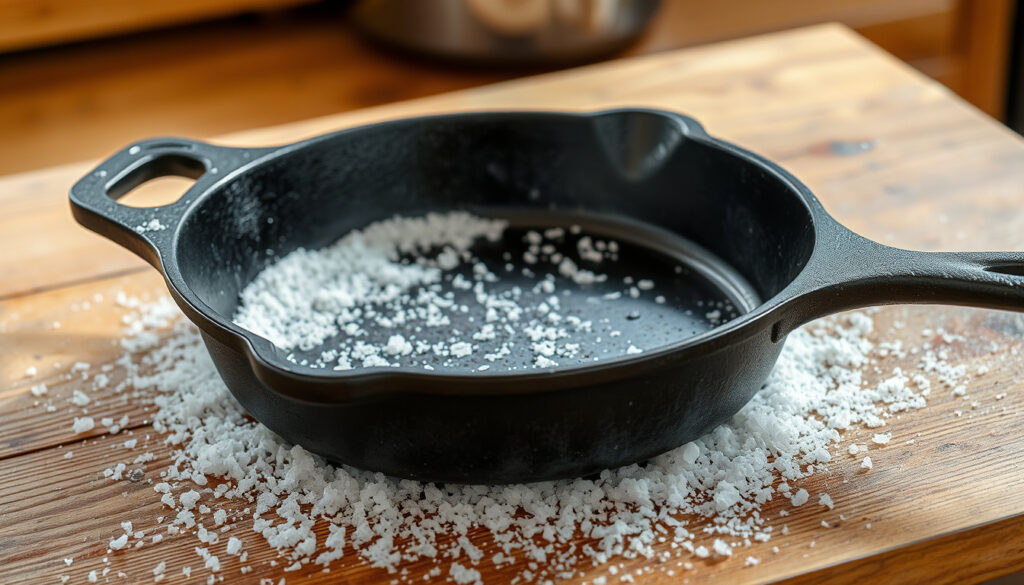
How to Clean Cast Iron with Salt: Step-by-Step Guide
A cast iron skillet that cooks beautifully loses its edge when cleaned the wrong way. Coarse kosher salt works as a gentle abrasive that lifts stuck-on food without scratching the surface, according to Field Company, a cookware brand known for detailed cast iron care guides. This guide walks through exactly how to do it, step by step.
Recommended Salt: Coarse kosher salt · Amount per Clean: 2-3 tablespoons · Scrub Tool: Paper towel or cloth · Frequency: After each use · Top Method Source: Field Company
Quick snapshot
- Salt is safe and does not corrode cast iron (Field Company)
- Salt effectively removes stuck-on food residue (The Ranch Table)
- Coarse kosher is the recommended salt type (Field Company)
- Exact iron leaching levels during cooking
- Long-term studies on optimal salt cleaning frequency
- Cast iron care guides show consistent protocols across brands (Field Company)
- Salt cleaning methods feature prominently in current cookware recommendations (Apartment Therapy)
- Seasoning after cleaning restores protective layer (Apartment Therapy)
- Consistent care prevents future buildup (Field Company)
| Field | Value |
|---|---|
| Salt Type | Coarse kosher |
| Pan State | Warm after cooking |
| Rinse After | Hot water wipe |
| Dry Method | Heat on stove |
| Standard Amount | 2-3 tablespoons |
| Seasoning Oil | ¼ teaspoon |
Can you use salt to clean a cast iron?
Yes, you can—and it works well. Coarse kosher salt is one of the safest abrasives for cast iron because although salt is hard, it’s still softer than cast iron, so it doesn’t risk scratching the surface of your skillet. It lifts stuck-on food residue effectively without damaging the seasoning layer underneath.
Basic steps with salt
- Warm the pan slightly after cooking—just warm enough to touch safely
- Add 2-3 tablespoons of coarse kosher salt directly to the pan
- Fold a paper towel or clean cloth and scrub the salt in circular motions
- Discard the salt and wipe the pan clean with a dry towel
- Rinse briefly with warm water if needed
- Dry thoroughly and heat on stovetop over medium-low for 5 minutes
This method works for everyday post-cooking cleanup. For a standard skillet, use 2-3 tablespoons of coarse kosher salt; less for smaller pans, according to Field Company. The heat helps evaporate any remaining moisture and prepares the surface for re-seasoning.
Tools needed
- Coarse kosher salt (about 2 tablespoons per cleaning)
- Paper towels or a clean cloth
- Stovetop or burner for drying
After scrubbing with salt, discard the salt, rinse with warm water, dry thoroughly, and heat on stovetop over medium-low for 5 minutes until smoke appears, then apply a thin layer of oil (about ¼ teaspoon) after drying and heating, wiping to a matte finish to season the pan. Field Company recommends vegetable oil, olive oil, or Crisco for this step.
Salt cleaning takes under 10 minutes for everyday use and requires no special products—most home kitchens already have everything needed.
What is the best way to clean cast iron?
The salt method stands out as the preferred approach among cookware experts and home cooks alike. It skips soap entirely, which matters because soap can strip the careful seasoning that makes cast iron non-stick over time. Chef Eric demonstrates this approach in short videos: warm the pan, add salt, scrub, and wipe clean.
Salt method overview
- Pour a few tablespoons of coarse salt into the warm pan
- Wipe with a dry paper towel using firm pressure
- For heavier residue, add a small amount of cooking oil with the salt
- Rinse with lukewarm water only if necessary
- Dry completely with a towel
Kosher salt removes stuck-on food without scratching or removing seasoning since salt is softer than cast iron, as confirmed by Alto-Hartley, a cookware care resource. The rough texture of kosher salt does the heavy lifting without gouging the surface.
Post-clean seasoning
After every salt cleaning, re-seasoning keeps the pan protected. Heat the dry pan on medium-low for 5 minutes, add about ¼ teaspoon of oil, and wipe it around with a paper towel until the surface looks matte—almost dry. Apartment Therapy notes that repeating this oil heating after every cleaning maintains the seasoning layer long-term.
The implication: consistent seasoning after each clean builds up a better cooking surface over time, making future cleanups easier.
Will salt corrode cast iron?
Salt does not corrode cast iron when used correctly. The science is straightforward: although salt is hard, it’s softer than cast iron, so it won’t scratch or damage the cookware surface. The Field Company confirms that short salt scrubs are safe for seasoning, though prolonged simmering of salty dishes can damage it over time.
Safety facts
- Salt is softer than cast iron—safe for regular use
- Short cleaning sessions don’t harm seasoning
- Prolonged exposure to salt (long cooking) can affect seasoning
Expert confirmation
Cookware experts consistently confirm that salt is a safe abrasive cleaner for cast iron. Field Company specifically recommends salt for everyday cleaning precisely because it’s effective without being destructive. The key is using it during cleaning sessions, not during cooking.
What this means: you can clean your cast iron with salt after every use without worrying about corrosion or damage to the seasoning layer.
How do you get tough gunk off cast iron?
For baked-on residue that doesn’t budge with basic scrubbing, escalate the approach. Heat the pan first—this loosens stuck food more than cold scrubbing ever could. Some cooks add a few tablespoons of salt to the hot pan, let it heat for 5 minutes to extract impurities, then scrub. The salt turns brown or darker when extracting impurities, indicating it’s working. YouTube instructor Georgia demonstrates this hot-salt technique.
Salt scrubs for burnt-on
- Heat the pan until it just starts to smoke (about 5 minutes)
- Add coarse salt generously and let it sit for a few minutes
- Scrub firmly with a folded paper towel or bamboo scrubber
- Cool for 5 minutes if needed, then scrub hard for about 1 minute
- Discard salt and wipe clean
For sticky residue that won’t come off, heat the pan and scrape gently with a wooden or plastic spatula before the salt scrub—this resolves most stubborn spots, according to Field Company. After a dozen uses, any remaining sticky areas from oil residue incorporate naturally into the seasoning.
Salt combos
Combining salt with other household items helps tackle specific problems. The potato-salt method works well for rusty pans: sprinkle a hefty amount of coarse sea salt (about ½ cup for a 12-inch skillet) and scrub with a cut potato. The potato provides moisture to help salt lift rust, and you should scrub in circular motions with pressure on the sides, edges, and handle, per Apartment Therapy.
The catch: rusty pan cleaning gets messy. Work outside or on newspaper to contain the salt and rust particles.
For very dirty or rusty pans, you may need to rinse and repeat with fresh salt multiple times before the surface clears completely.
What should you not clean cast iron with?
Avoid soap on cast iron for routine cleaning—it strips the seasoning that gives the pan its non-stick properties. Dish soap is fine occasionally if you plan to re-season immediately, but skipping it preserves the built-up layer. Chef Eric demonstrates this with the tagline “Skip the soap and use SALT.”
Soap myths
- Modern dish soap won’t necessarily destroy seasoning in one wash—but it can degrade it over time
- Soap removes oils that make up the seasoning layer
- Salt method is preferred because it cleans without stripping
Harsh alternatives
Steel wool and harsh scrubbers gouge the surface, creating spots where rust can take hold. If you need something sturdier than a paper towel, a chain mail scrubber works well—Field Company considers it the best alternative to salt for heavy cleaning. Bamboo scrubbers work for hot-salt cleanup but aren’t needed for everyday use.
The trade-off: using harsh tools saves time now but costs you weeks of seasoning repair later.
Upsides
- Salt is a household item—no special purchase needed
- Safe for regular use without damaging seasoning
- Effective for both everyday cleanup and heavy-duty restoration
- Works on warm pans without water or soap
Downsides
- Messy for rusty pan restoration—requires cleanup afterward
- Doesn’t work well on cold pans
- May need multiple rounds for very dirty pans
- Salt residue requires thorough drying afterward
Comparing cleaning methods
Three approaches dominate cast iron care, each with distinct trade-offs. Salt scrub works best for post-cooking cleanup, the potato-salt combo targets rusty pans specifically, and chain mail handles the toughest buildup.
| Method | Best For | Tools Needed |
|---|---|---|
| Salt Scrub with Paper Towel | Everyday post-cooking cleanup | Kosher salt, paper towel |
| Potato-Salt Combo | Rusty pans, heavy oxidation | Coarse salt, cut potato |
| Chain Mail Scrubber | Heavy gunk, baked-on residue | Chain mail scrubber, oil |
| Hot Salt Cook | Stubborn stuck-on food | Salt, heat source, bamboo scrubber |
The pattern here is clear: gentler methods (salt alone) suit daily care, while more aggressive approaches tackle restoration.
What experts say
Although salt is hard, it’s still softer than cast iron, so it doesn’t risk scratching the surface of your skillet.
— Field Company (Cookware Brand)
The potato is just moist enough to help the salt work off the rust.
— Apartment Therapy (Home Living Publication)
Our salt has gotten a little bit brown and that’s because it’s extracting all of those impurities from the cast iron.
— Georgia (YouTube Instructor)
The bottom line
Salt cleaning works reliably when done on a warm pan, and the process takes under 10 minutes from start to re-seasoned finish. For everyday cooks, the routine is simple: scrub with 2-3 tablespoons of coarse salt, dry with heat, and apply a thin coat of oil. For anyone dealing with rusty or neglected pans, the potato-salt method offers a gentle restoration path without harsh chemicals. Field Companyoid ambient moisture between uses—this prevents the buildup that makes deep cleaning necessary.Why this mattersHome cooks who master salt cleaning spend less time on cast iron care and get better cooking results—the seasoning builds up with each proper clean.
Related reading: How to Clean Cast Iron Skillets with Salt · How to Clean a Cast Iron Skillet
Pros often highlight scrubbing with coarse salt, as in this similar step-by-step method, to lift gunk without soap or harsh chemicals.
Frequently asked questions
What is the best thing to clean cast iron with?
Coarse kosher salt is widely regarded as the best everyday cleaner for cast iron. It removes stuck-on food without scratching or removing the seasoning layer.
Can you really use soap on cast iron?
You can, but it’s not recommended for regular use. Soap strips the oils that make up the seasoning. If you must use soap, re-season the pan immediately afterward by heating it with a thin coat of oil.
How to clean cast iron with salt and baking soda?
Baking soda can assist with tough stains but is harsher than salt. Use it sparingly—sprinkle a small amount with salt on a warm pan, scrub gently, rinse, and dry thoroughly.
Can cleaning cast iron with lemon help?
Lemon’s acidity can help with light rust but may affect seasoning if overused. Salt alone handles most jobs; save lemon for spot treatments on minor rust.
Does cooking in cast iron add more iron to your diet?
Cooking in cast iron can increase dietary iron, particularly with acidic foods. However, this varies based on cookware age, seasoning quality, and the foods being prepared.
How to clean a cast iron skillet with burnt-on food?
Heat the pan until it smokes, add coarse salt, let it sit for a few minutes, then scrub firmly with a paper towel or bamboo scrubber. Repeat if necessary.
Can you use a potato to clean cast iron?
Yes. Cut a potato in half, dip it in coarse salt, and scrub rusty spots in circular motions. The potato’s moisture helps the salt lift oxidation without harsh chemicals.
How often should you clean cast iron with salt?
After each use is ideal. A quick salt scrub after cooking, followed by drying and light oiling, keeps the pan in good condition with minimal effort.
More related posts
 DBS Credit Card Annual Fee Waiver: How to Get it Waived
 Old Chang Kee Curry Puff: History & Reheating Tips
 Gong Yuan Mala Tang Menu: Prices, Outlets & Delivery
 26 Inches to cm: Exact Conversion and Real Size Guide
 East Ocean Teochew Restaurant Closes After 33 Years: Menu, Reviews
 Hanoi to Ninh Binh: Transport, Times, Day Trips & Comparisons
 Physio and Sole Clinic: Owner, Locations, Charges & Reviews
 Tasha Low Tyler Ten Reunite: Are They Together in Real Life?