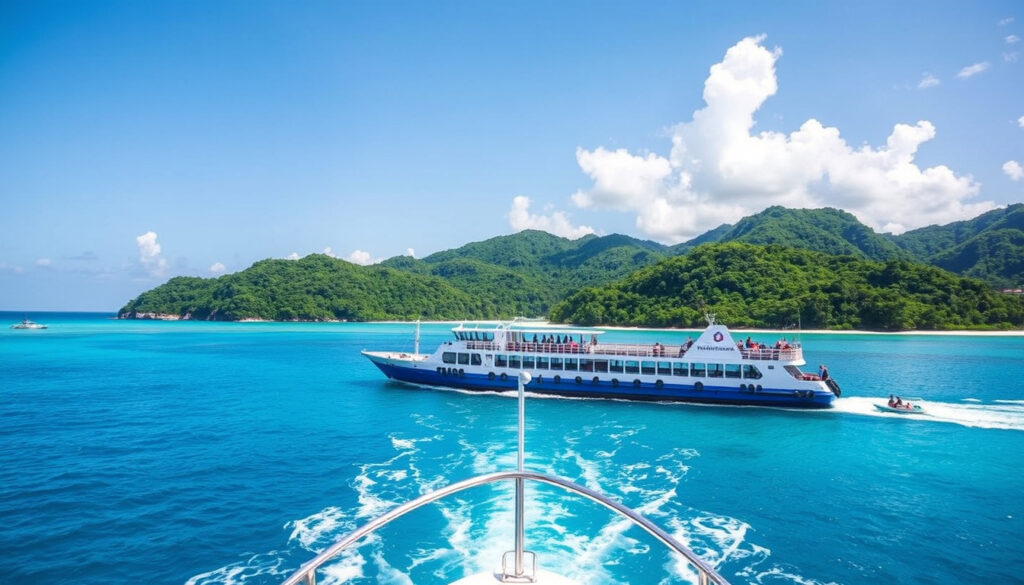
Tioman Island from Singapore: Best Travel Options
Planning a beach escape from Singapore often leads to a familiar question: which island is worth the journey? Tioman Island, a 200-kilometer hop east across the South China Sea, draws travelers with its clear water and coral reefs — but getting there takes a little planning. This guide lays out every transport option from bus to ferry to flight, along with the one factor that can make or break your trip: the monsoon season.
Distance from Singapore: Approximately 200 km east ·
Travel time (bus + ferry): 3–4.5 hours ·
Ferry crossing duration: 1.5–2 hours ·
Best season: March to October ·
Monsoon avoidance month: November to February
Quick snapshot
- Ferry from Mersing to Tioman takes 1.5–2 hours depending on operator and conditions (you.co travel guide platform)
- No commercial airport on Tioman Island; nearest is Johor Bahru (JHB) (TripZilla travel portal)
- Monsoon season typically runs from November to February (WeekendGoWhere travel guide)
- Alcohol is available but restricted under Pahang state law (you.co travel guide platform)
- Exact ferry schedule varies seasonally and is not published more than a few weeks in advance (Paya Beach Resort accommodation provider)
- Prices for packages and flights fluctuate; no fixed year-round rate (TripZilla travel portal)
- March to October: peak season, calm seas, full ferry schedules (WeekendGoWhere travel guide)
- November to February: northeast monsoon, rough seas, frequent cancellations (Holafly travel tips site)
- Book ferry slots at least 30–60 minutes before departure (WeekendGoWhere travel guide)
- Check real-time ferry schedules on the Bluewater or Cataferry website before booking (you.co travel guide platform)
- Book accommodation and transport at least 2–3 weeks ahead during peak season (Fussy Mama family travel blog)
| Label | Value |
|---|---|
| Distance from Singapore | Approximately 200 km |
| Bus journey duration | 3 hours to Mersing jetty |
| Ferry journey duration | 1.5–2 hours |
| Peak travel season | March to October |
| Monsoon season | November to February |
The table above confirms the core logistics: Tioman is close in distance but requires a multi-leg journey, making timing and route choices critical.
How do I get to Tioman Island from Singapore?
Getting to Tioman from Singapore means crossing into Malaysia first. Every route involves a road leg to a mainland jetty and then a ferry — there’s no direct connection. The three main options each have their own trade-offs.
Bus and ferry combination
- Direct coach from Singapore to Mersing Jetty takes about 3 hours, with operators like KKKL running regular services (you.co travel guide platform).
- Ferry from Mersing to Tioman crosses in 1.5 to 2 hours, calling at jetties such as Genting, Paya, Tekek, ABC and Salang (you.co travel guide platform).
- One-way bus tickets reportedly cost around 35 SGD, while ferry tickets are about 60–85 MYR (Hotel Del Oise travel tips site).
This is the most popular choice for travellers who want to avoid driving. The coach handles border formalities, and you simply switch to the ferry at the jetty.
Private car to Mersing jetty
- Driving from Singapore to Mersing takes roughly 2.5 to 3 hours, depending on traffic at the Causeway or Second Link (Paya Beach Resort accommodation provider).
- Park your car at the Mersing Jetty for around RM10–20 per day (Paya Beach Resort accommodation provider).
- You still need to buy ferry tickets separately for every passenger. A round-trip private transfer from Mersing Jetty to Singapore is reportedly about 450 SGD (Paya Beach Resort accommodation provider).
Driving gives you flexibility on departure time, but the extra cost and parking fees add up, especially for solo travellers.
Flight to Tioman via Johor Bahru
- No commercial flights land on Tioman Island itself. The nearest airport is Senai (JHB) in Johor Bahru (TripZilla travel portal).
- From JHB, you need a taxi or bus to Mersing Jetty (about 2 hours), then the ferry (Holafly travel tips site).
- Flight time from Singapore Changi to JHB is about 45 minutes, but with transfers the total door-to-door time is similar to the bus route (Fussy Mama family travel blog).
Flying adds a second transfer but might appeal to travellers who prefer to avoid a long bus ride. In practice, the total travel time is about the same as the bus-and-ferry option, so the premium rarely pays off unless you have airline miles to burn.
Package tour
- Many Singapore agencies bundle coach, ferry, and accommodation. Package prices start from about S$129 per person (TripZilla travel portal).
- Packages are less flexible but remove the hassle of booking separate legs (WeekendGoWhere travel guide).
The best option depends on your budget and group size. Families often find the bus+ferry combo the simplest; groups of 4+ may save with a private car.
Which month cannot go to Tioman?
The northeast monsoon from November to February brings rough seas and frequent ferry cancellations. Many resorts and dive operators close during this period, making travel difficult and sometimes impossible.
Monsoon season: November to February
- Rough seas during the monsoon lead to cancelled ferries; even when ferries run, the crossing can be uncomfortable (WeekendGoWhere travel guide).
- Many resorts on the eastern side of the island shut down entirely from November to February (Holafly travel tips site).
- March to October is the dry, peak season for travel with calm seas and full services (you.co travel guide platform).
Even in the “safe” months, tide-dependent ferry schedules mean you should always confirm departure times a day before travel – don’t rely on year-old online timetables. The pattern: monsoon season is not a minor inconvenience but a trip-breaker for most itineraries.
Ferry cancellations and safety risks
- Ferry operators do not sail during storm warnings; you may be stranded on Tioman or the mainland for days (Paya Beach Resort accommodation provider).
- Travel insurance is strongly recommended during the shoulder months (October and March) when weather is unpredictable (Fussy Mama family travel blog).
For Singapore-based travellers, the monsoon risk is often underestimated. A trip booked in December might end up with a bus ride to a closed jetty and no ferry at all.
Is Tioman Island worth it?
Tioman offers clear water, coral reefs, and a relaxed vibe – but the ferry access is less convenient than Langkawi or Penang. Whether it’s worth the effort depends on what you value.
Pros of visiting Tioman
- Excellent snorkelling and diving sites with healthy coral reefs (WeekendGoWhere travel guide).
- Accommodation ranges from basic chalets (from RM80/night) to mid-range resorts like Paya Beach (Paya Beach Resort accommodation provider).
- Quieter and less developed than Langkawi – ideal for travellers seeking a nature-focused escape (Fussy Mama family travel blog).
Cons and trade-offs
- Ferry access is less convenient than Langkawi or Penang, requiring a bus+ferry combo (TripZilla travel portal).
- Monsoon season (Nov–Feb) can disrupt trips entirely (Holafly travel tips site).
- Nightlife is very limited compared to Thai islands (you.co travel guide platform).
Upsides
- Excellent snorkelling and diving
- Affordable accommodation
- Peaceful, uncrowded beaches
Downsides
- Inconvenient ferry access from Singapore
- Monsoon risk
- Limited nightlife
Which is better, Langkawi or Tioman Island?
Both islands are popular with Singapore travellers, but they serve different travel styles. Here’s how they compare on the factors that matter most.
The table below reveals a clear split: Langkawi wins on convenience and nightlife, while Tioman excels in diving quality and quiet.
| Criterion | Langkawi | Tioman |
|---|---|---|
| Access from Singapore | Direct flights (1.5 hr) or bus+ferry | Bus+ferry only (3.5–5 hr total) |
| Snorkelling & diving quality | Good but can be crowded | Excellent, more pristine reefs |
| Nightlife & dining | Developed, bars, restaurants, duty-free shopping | Limited, mostly resort-based |
| Infrastructure | High – international airport, malls, golf course | Low – basic amenities, few ATMs |
| Best for | Families, shoppers, nightlife seekers | Snorkellers, divers, peace seekers |
Langkawi’s direct flights and developed infrastructure make it the easier choice for most Singapore families. Tioman wins on diving and serenity but demands more travel effort and flexibility. The pattern: choose Langkawi for a comfortable all-rounder trip; choose Tioman when the primary goal is underwater exploration.
Can you drink alcohol on Tioman Island?
Tioman is part of Pahang state, which imposes restrictions on alcohol sales. While you won’t find the duty-free scene of Langkawi, alcohol is still available.
Alcohol availability in resorts and shops
- Many resorts serve alcohol to guests, especially at Tekek, Paya, and ABC beach (you.co travel guide platform).
- Some minimarts sell beer, but selection is limited and prices are higher than on the mainland (Holafly travel tips site).
Alcohol laws in Pahang state
- Pahang is a conservative state; public drinking and drunkenness can attract fines (you.co travel guide platform).
- No major duty-free permits exist on Tioman, unlike Langkawi (TripZilla travel portal).
If you plan to drink a lot, bring your own from Singapore’s duty-free at the departure zone – but note the 1-litre spirit limit on entering Malaysia. The implication: alcohol is accessible but not cheap or abundant; plan accordingly.
Step-by-step planning guide
- Step 1: Choose your travel months – aim for March to October to avoid monsoon cancellations (WeekendGoWhere travel guide).
- Step 2: Decide on transport mode – bus+ferry is cheapest, car gives flexibility, package offers convenience (you.co travel guide platform).
- Step 3: Book bus tickets (e.g., KKKL Singapore to Mersing) online at least 2 weeks ahead for best prices (Hotel Del Oise travel tips site).
- Step 4: Check ferry schedules on the day before travel – call the operator to confirm tide times (Paya Beach Resort accommodation provider).
- Step 5: Purchase ferry tickets at Mersing Jetty or pre-book via Bluewater Express / Cataferry (you.co travel guide platform).
- Step 6: Arrive at Mersing Jetty at least 30–60 minutes before departure to secure boarding (WeekendGoWhere travel guide).
- Step 7: Choose your Tioman beach village – Tekek (main hub), Paya (quiet), ABC (budget), Salang (diving) (Fussy Mama family travel blog).
Confirmed facts and what’s still unclear
Confirmed facts
- Ferry from Mersing to Tioman takes 1.5–2 hours (you.co travel guide platform)
- No commercial flights to Tioman – nearest airport is Johor Bahru (TripZilla travel portal)
- Monsoon season runs November to February (WeekendGoWhere travel guide)
- Alcohol is restricted under Pahang state law (you.co travel guide platform)
What’s still unclear
- Exact ferry schedules are published only a few weeks in advance – seasonal variations are unpredictable (Paya Beach Resort accommodation provider)
- Package and flight prices fluctuate with demand – no fixed year-round rate (TripZilla travel portal)
Quotes from the road
The journey from Singapore to Mersing Jetty takes around three hours.
– Representative of KKKL Bus Operator, via you.co travel guide platform
The journey from Mersing Jetty to Tioman Island typically takes about 1.5–2 hours, depending on the ferry operator, tide, and weather conditions.
– Travel guide from WeekendGoWhere travel guide
Tioman is a great option for families with young children because the coach is air conditioned and stress-free.
– Fussy Mama (family travel blog), Tioman Island Family Guide
For Singapore-based travellers, the choice between transport modes ultimately comes down to how much flexibility you need and whether you’re willing to risk monsoon season. The bus+ferry option remains the most practical balance of cost and reliability – especially if you plan between March and October. The catch: without proper timing, even the best-laid plans can unravel against monsoon unpredictability.
Related reading: Best Islands to Visit in Greece: Safety, Budget & Top 5 · Sri Lanka vs Thailand: Which Is Best for Your 2025 Trip
facebook.com, onceinalifetimejourney.com, thesmartlocal.com, malaysiauncovered.com, swingbysingapore.com
Frequently asked questions
How much does it cost to go to Tioman Island from Singapore?
A one-way bus+ferry trip costs around S$50–80 per person; package tours start from S$129 per person. Private car transfers can cost about S$450 round trip.
Is Tioman Island safe for solo travelers?
Yes. Tioman is generally safe, though solo travellers should stick to well-populated beaches like Tekek and ABC. Let someone know your itinerary if you go diving alone.
Do I need a visa to visit Tioman Island from Singapore?
No, Singapore passport holders get visa-free entry into Malaysia for up to 90 days. Other nationalities should check Malaysian visa requirements.
What is the best accommodation on Tioman Island?
For families, Paya Beach Resort offers mid-range comfort. Budget travellers prefer ABC Beach bungalows. Divers often stay at Salang Indah.
Can I snorkel on Tioman Island without a guide?
Yes, you can snorkel from many beaches, especially Paya, Salang, and Genting. However, a guide is recommended for offshore dive sites like Coral Island.
How many days should I spend on Tioman Island?
Most travellers stay 3–4 days. A weekend trip (2 nights) is possible but tight; 4–5 days allows time for snorkelling and island hopping.
More related posts
 Chappell Roan Grammy Outfit 2026: Prosthetics, Tattoos Explained
 HeartlandHealth Bedok South: Hours, Location & Services
 Hong Kong Holiday 2025 – Full List and Key Dates
 China Square Food Centre: Hours, Menu, Best Stalls Guide
 OCBC 360 Interest Rate Guide: Current Rates, Pros & Cons, Comparison
 Vivo X200 Pro Price in Singapore: Deals from S$694
 Chow Yun-Fat Movies: Best Films, Roles & Career Guide