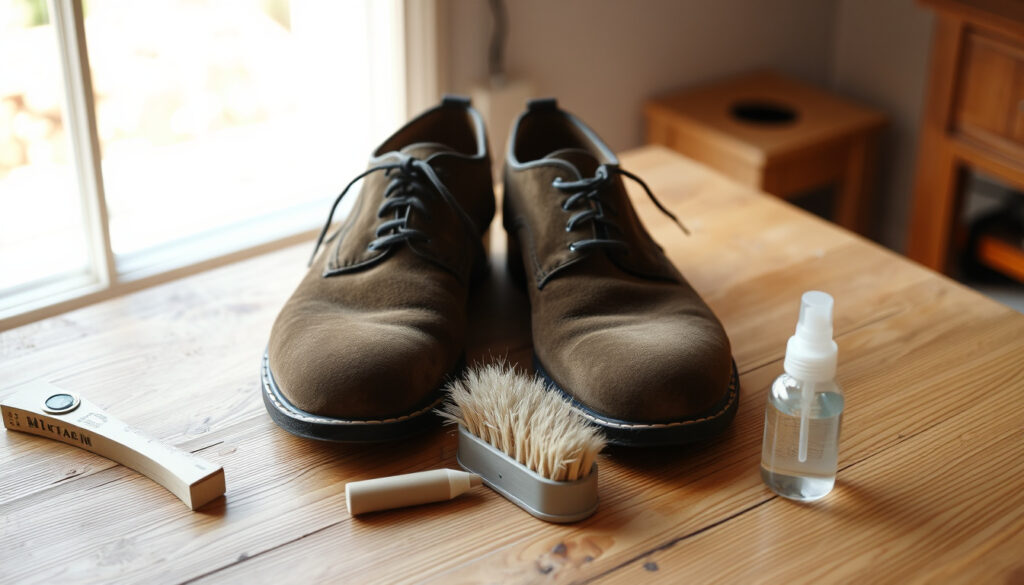
How to Clean Suede Shoes at Home: 5 Safe & Easy Methods
Few things age a shoe faster than a dirty suede upper, which is why the correct first move matters more than fancy products. You can lift most scuffs and stains at home with items you already own — a suede brush, a lint-free cloth, and white vinegar are the tools that keep showing up in Nike’s and Clarks’ care guides, but the catch is the order of operations: wet suede needs to dry first, heat is the enemy, and one wrong cleaner can turn a fixable mark into a permanent one.
Suede material: Napped leather from animal hide underside ·
Common household cleaning agents for suede: Vinegar, baking soda, micellar water ·
Number of Google “People Also Ask” questions on topic: 12
Quick snapshot
- Wet or muddy suede must dry naturally before brushing or cleaning (Good Housekeeping’s cleaning experts)
- A suede or nubuck brush is the standard first tool for lifting dry dirt (Björn Borg’s suede care guide)
- Coffee or red wine stains should be blotted with a white towel while still wet (Good Housekeeping UK)
- Whether water permanently ruins suede — the outcome seems to depend on drying and the state of the nap (Clarks UK’s suede care guide)
- Whether commercial suede cleaners are always preferable to homemade solutions depends on the stain type — Clarks’ shoe care guide recommends a foaming cleaner, while other guides focus on homemade mixes.
- Whether soap and water should ever be used on suede is unclear: Nike’s shoe-care guide warns against soap and water, yet some gentle cleansers like micellar water are sometimes used.
- Cornstarch needs at least an hour on the stain before it is brushed away (Deichmann’s care guide)
- After damp cleaning, air-dry in a cool, well-ventilated place before the final brush pass (Charles & Keith’s care guide)
- Test any cleaner on a small inconspicuous area before full application (Kate Spade’s suede cleaner instructions)
Nine rules distilled from suede care guides across shoemakers and cleaning testers, one pattern: dry brushing comes first, and liquids only enter the picture when a mark actually needs them.
| Fact | What the care guides say |
|---|---|
| Suede material | Napped leather from the underside of an animal hide |
| Cleaning difficulty | Moderate; requires care to avoid water stains |
| Most common mistakes | Too much water, vigorous rubbing, oil-based products |
| First tool for dry dirt | A suede or nubuck brush, worked in the direction of the nap |
| Liquid rule | Lightly dampen, never drench |
| Stubborn stains | Suede shampoo or a foaming cleaner |
| Fresh coffee or wine | Blot with a white towel while the stain is still wet |
| Drying | Away from direct heat or sunlight, then a light brush to restore the nap |
| Home-kitchen option | White vinegar or rubbing alcohol in a diluted mix |
How Do I Clean Suede Shoes at Home?
The order of operations matters more than any product. Every guide here starts with the same instruction: do not touch wet or muddy suede until it has dried.
Tools needed
- Suede or nubuck brush — the standard first tool for dry dirt
- Clean lint-free cloth or white towel — for damp spot-cleaning and blotting
- White vinegar or rubbing alcohol — for tougher marks, in small amounts or as a diluted mix with water
- Suede shampoo or foaming cleaner — for stubborn stains
- Cornstarch — for oily marks, left to sit before brushing away
- Suede eraser — for scuffs and dark marks that brushing leaves behind
General step-by-step method
- Let wet or muddy shoes dry naturally. Cleaning damp suede pushes dirt deeper and distorts the nap.
- Remove the laces and any charms first so the upper gets an even finish (Charles & Keith’s care guide).
- Brush the dry upper with a suede or nubuck brush, working in the direction of the nap (Björn Borg’s suede care guide).
- Spot-clean surviving marks with a lightly dampened cloth — with water, a little suede cleaner, white vinegar, or rubbing alcohol — and work gently (Nike’s shoe-care guide).
- Blot fresh coffee or red wine with a white towel while the stain is still wet; do not rub.
- Air-dry in a cool, well-ventilated place away from direct heat and sunlight (Charles & Keith), then brush lightly to lift the nap.
That is the entire method. The commercial kits add foam, sprays, and conditioners, but the core sequence — dry, brush, damp-wipe, dry again — is what the major guides share.
What Is the Best Cleaner for Suede?
No single cleaner wins every case. The guides split into two camps: specialist products made for suede, and kitchen-cabinet fixes that cost almost nothing.
Commercial suede cleaners
- Suede and nubuck foaming cleaner — Clarks names this as its recommended route for suede shoes (Clarks’ shoe care guide)
- Suede shampoo — formulated for stubborn stains, applied with a brush or cloth
- Care kits — branded suede cleaner with instructions that call for testing on a hidden area first
Homemade alternatives
- White vinegar or rubbing alcohol mixed 1:1 with water — Deichmann’s formula for everyday stains (Deichmann’s suede care guide)
- Cornstarch — sprinkled over oily marks, left to sit, then brushed away
- Micellar water — a cotton-pad wipe that has built a following in user experiments and a Goodto.com report as a gentle way to lift grime without wetting the fibers
Micellar water as a gentle option
You do not need a drawer full of suede products. A brush, white vinegar, cornstarch, and a clean cloth handle most daily marks; specialist foams earn their price when a stain ignores all four.
Micellar water fits the same pattern as vinegar: a mild liquid that picks up dirt without running through the shoe. The trick is to use it the same way — on a lightly dampened cloth, pressing and lifting rather than scrubbing.
The trade-off: commercial cleaners arrive with tested formulas and clear labels, while homemade mixes cost pennies and need a test patch and a bit of trial and error.
The pattern: start with the gentlest method — brushing and a damp cloth — and escalate to vinegar or foaming cleaners only when the stain persists.
Can I Clean Suede Shoes with Water?
Yes — with one rule attached: lightly dampened, never drenched. Water is not the enemy; soaking is.
When water is safe
- Light surface marks — a damp, lint-free cloth is Clarks UK’s baseline method (Clarks UK’s suede care guide)
- Marks that survive brushing — the cloth should be lightly dampened to carry a little cleaner, vinegar, or alcohol (Nike’s shoe-care guide)
- Damp cleaning can temporarily darken suede — guides note it should air-dry without visible marks
Risks of water damage
- Drenching — soaks the lining, distorts the shape, and leaves tide marks that brushing cannot fix
- Uneven drying — water stains appear when parts of the shoe dry at different speeds, which is why a cool, well-ventilated spot matters
- Heat drying — radiators and blow dryers can damage the material (Good Housekeeping’s cleaning experts)
Alternative cleaning liquids
- Suede shampoo or foaming cleaner — for stubborn stains, applied with a soft cloth
- White vinegar or rubbing alcohol — used like water: on a lightly dampened cloth, never poured on
- Micellar water — cotton-pad option for light grime, following the same damp-wipe rule
What this means: water is a delivery system, not a soak. Keep the cloth damp, keep the stain local, and let the shoe dry the slow way.
What Should You Not Use on Suede?
The fastest way to ruin suede is to clean it with the wrong products. The brand guides agree on what stays away.
Harsh chemicals
- Soap and water — Nike’s guide warns they can make suede messier (Nike’s shoe-care guide)
- Bleach, ammonia, and all-purpose detergents — the same caution applies; they strip color and stiffen the nap
Oil-based products
- Oil and wax-based conditioners — they sink into the nap, leave residue, and attract more dirt; suede responds to powders, foams, and diluted liquids instead
Abrasive tools
- Hard brushes and rough sponges — the suede or nubuck brush is the correct tool because it lifts dirt without scraping the nap
- Vigorous scrubbing — blot first, brush in the nap direction, and let stubborn marks come up in layers
Heat is the one mistake that cannot be brushed out. Radiators and blow dryers dry suede too fast, leaving the fibers stiff and the color uneven — which is why the guides make patience part of the method.
The pattern: anything that strips, oils, or heats the nap works against the material. Suede wants gentle friction, cool drying, and liquids measured in drops, not cups.
How to Make Suede Shoes Look Like New?
Most “ruined” suede is actually just dirty and flattened. The nap — the fuzzy surface you feel — can be lifted back with brushing and slow drying.
Restoring color and texture
- Brush the entire upper in the nap direction to re-fluff the surface and even out the shading
- After any damp step, air-dry away from heat, then brush lightly to restore the nap (Kate Spade’s care instructions)
Removing stubborn stains
- Suede eraser — the standard companion to the brush for scuffs and dark marks
- Cornstarch — leave on oily marks until it has drawn the oil out, then brush away
- Foaming cleaner — the route shoemaker Clarks recommends when home fixes stall
Reviving the nap
- Test any product on a small inconspicuous area first — Kate Spade’s suede cleaner instructions require it before full application (Kate Spade’s suede cleaner instructions)
- Steam is the folk remedy for flattened nap, but the documented method is simpler: a full dry, then a final light brush
- Finish with a suede protector spray once the shoes are dry — the cheapest insurance against the next coffee spill
The last brush stroke tells. Kate Spade’s care instructions end with a light brushing after the shoes air-dry — that final pass is what makes a cleaned shoe look new instead of just clean.
Why this matters: restoration is mostly repetition — brush, blot, dry, brush again. Do it consistently and the shoes will outlive the habits that dirtied them.
A 1:1 mix of white vinegar or rubbing alcohol with water can handle certain stains.
Deichmann’s suede care guide
Blot coffee or red wine stains with white towels or a clean white cloth while the stain is still wet.
Good Housekeeping UK’s fashion desk
Every care guide in this article converges on the same habit: dry first, brush with the nap, dampen only the mark, and dry again without heat. Suede can survive years of rain, coffee, and sidewalk scuffs when the routine stays gentle and the drying stays slow. For anyone who owns suede shoes, the choice is clear: learn the brush-first routine and keep white vinegar and cornstarch in the cupboard, or accept that the next rainy commute leaves a permanent mark.
Frequently asked questions
Can I use fairy liquid to clean suede shoes?
Fairy liquid is dish soap, and dish soap is not designed for napped leather. Use a suede and nubuck foaming cleaner instead, or the diluted white vinegar mix from the homemade section above.
What is the best homemade shoe cleaner for suede?
The strong candidates are a diluted white vinegar or rubbing alcohol mix for surface marks and cornstarch for oily stains. Which one works best depends on the stain, so test on a hidden area first.
Does vinegar help clean suede shoes?
Yes. White vinegar is listed in Nike’s shoe-care guide as an option for tougher marks when applied with a lightly dampened cloth. It is a spot treatment, not a soak.
Can baking soda clean suede?
Baking soda is the kitchen-cabinet relative of the cornstarch method: an absorbent powder that sits on the stain and then brushes away. For oily marks it can work well; for surface grime, stick with brushing and a lightly dampened cloth.
How can I restore suede?
Brush the dry shoe in the direction of the nap, use a suede eraser on scuffs, and let the shoes air-dry away from heat. A final light brush after drying is what brings the nap back.
Is suede ruined once it gets wet?
No. Damp suede can be saved by drying it naturally, away from radiators and blow dryers. Clarks UK notes that damp cleaning may temporarily darken suede, but it should air-dry without visible marks.
What can I use if I don’t have suede cleaner?
You have good fallbacks: a diluted white vinegar or rubbing alcohol mix, cornstarch for oily marks, or a clean cloth for light brushing when no brush is available. The key is keeping everything lightly damp and letting the shoe dry slowly.
More related posts
 Credit Cards with Lounge Access: Top Picks & Guide
 Latest Mars Rover News: Discoveries, Updates & Future Missions
 2pm IST to SGT: Quick Conversion & Time Guide
 Jimmy O. Yang Singapore 2025: Shows, Tickets, and What to Expect
 Love Language Test Free: Instant Results No Signup
 Courts Megastore Tampines Reviews: Trustpilot, Yelp, Reddit
 33,000 Yen to SGD: Live Rate, Fees & Best Conversion
 Terjemahkan ke dalam Bahasa Inggris: Translate to English